
Pitzer's Presidents: 1963-2016
In 2016, in anticipation of the arrival of Pitzer’s sixth president, Melvin L. Oliver, the Pitzer College Archives took a look back at the men and women who were selected to stand at the helm of the College: a poet, an outspoken progressive, a pragmatist, a structural activist, and an ambitious transformer.
Shadowing five decades of the nation's financial uncertainties, political and social unrest, and concerns about the global climate, these people shepherded the College to emerge fiscally sound and with a reputation for educational innovation, intenrational engagement and political, social and environmental activism.
John W. Atherton
1963-1970
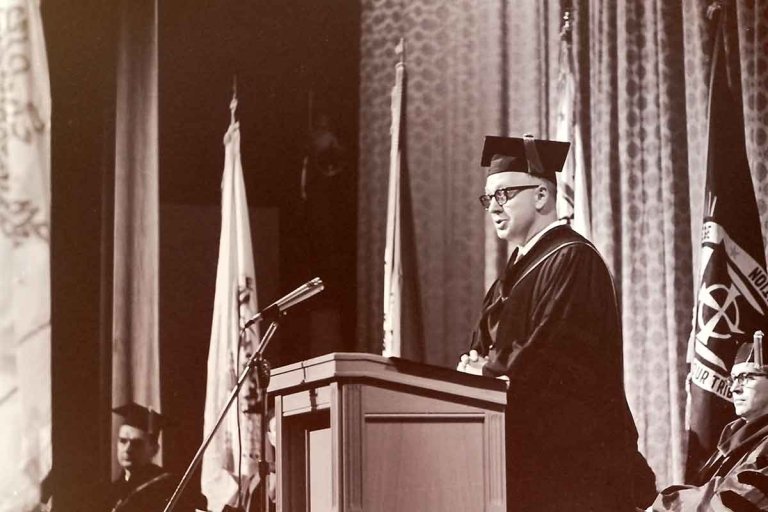
Handpicked by Pitzer's founding trustee, Robert Bernard, John W. Atherton was a published poet, author and English professor, not to mention Dean of Faculty at Claremont Men's College, before he accepted the challenge of becoming Pitzer's founding president. During his tenure, the campus grew from two buildings, when the doors opened for 150 students and elven faculty members in the fall of 1964, to eight buildings, 650 students and more than 50 faculty members when he left in 1970.
Charming stories float through Pitzer's lore surrounding John Atherton and his poet's sensibility: a reliance on intuitive decision making, including the hiring of new faculty and establishing a folklorist-in-residence, as well as the creative insight to engage a street photographer to capture the official record of the College for more than 10 years, thereby imprinting a character and flavor on Pitzer that persists to this day.
Robert H. Atwell
1970-1978
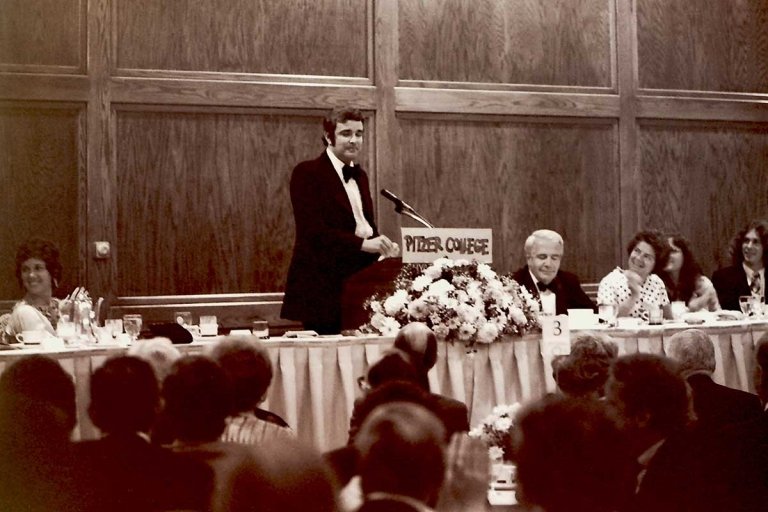
Pivoting from a poet to an outspoken progressive, Pitzer's trustees chose Robert H. Atwell from a crowded pool of prospects to guide Pitzer through the very tumultuous political, social and economic times of the day. Coming to Pitzer from the University of Wisconsin, Madison, Robert Atwell took office shortly after the Kent State shootings.
Robert Atwell's warm, easy-going demeanor and background in government research and administration may have obscured, for some, his liberal, maybe even radical, agenda with regards to Pitzer's future; if so, his forthright and plain-spoken aspirations put any such ambiguities to rest. Encouraged and excited by Pitzer's newness and small size, Robert Atwell took steps to embark on and fortify controversial concepts, from the idea that the college should be on the forefront of social reform to publically defending professor's rights to express their political views and a desire to see students participating in every level of college governance. While some other college leaders reacted to the changing times by entrenching the status quo, Robert Atwell reinforced and expanded a bold sense of experimentation, interdisciplinary teaching and social obligation.
Frank L. Ellsworth
1979-1991
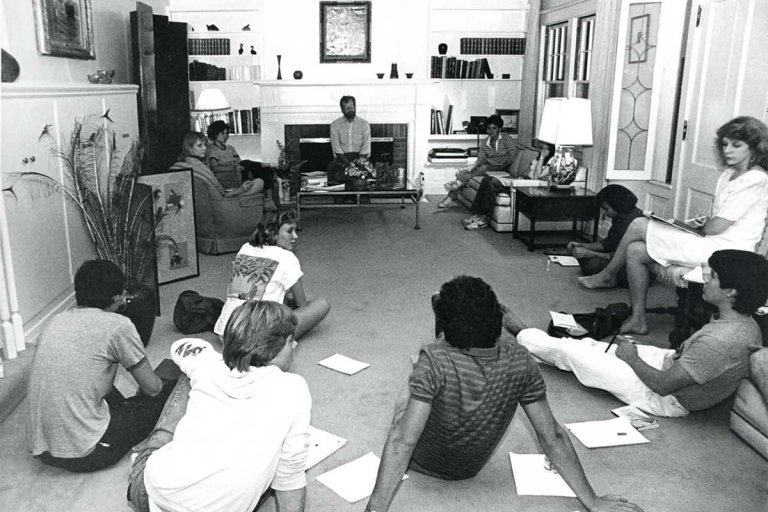
After 16 years and two former presidents who focused on cultivating and enriching the sense of community and intellectual life of students and faculty at Pitzer, the Board of Trustees zeroed in on a pragmatic Assistant Dean from the University of Chicago Law School to usher the College into a new decade. Frank L. Ellsworth made no mystery of the primary goal when he arrived on campus: raise money. Asked, time and again, what his central objectives as president were, the answer always remained, fund-raise, increase the endowment and improve the quality of students at Pitzer.
During a time of national economic instability, Frank Ellsworth injected a clear-eyed, stead and quietly forceful style of leadership: repopulating the Board of Trustees, restructuring Community Governance and, while sidestepping the College's previous approach of decision making by committee, personally selecting key administrators and student leaders, all done to a mantra of "effectiveness, efficiency and productivity."
Marilyn Chapin Massey
1992-2002
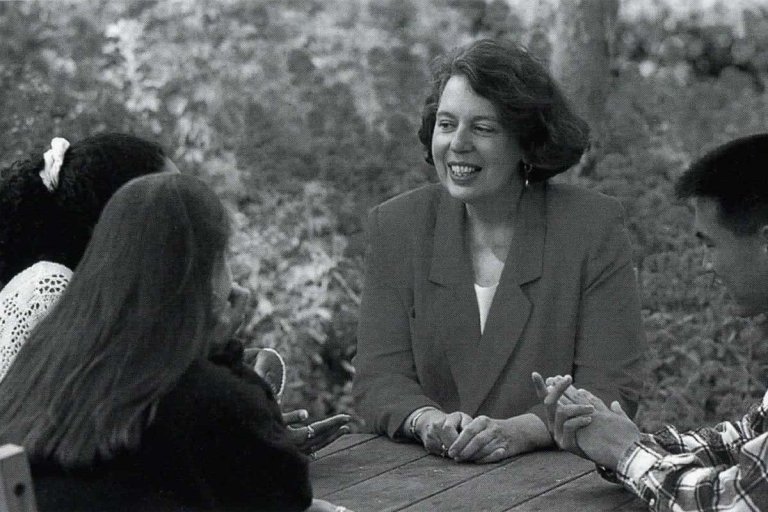
In keeping with the social and cultural movement that emerged in the 1990s, Pitzer's Board of Trustees chose its first woman to steer the College and tasked her with increasing diversity among the faculty and students. Marilyn Chapin Massey was a 20-year veteran of higher education administration, from Marymount Manhattan College, when she stepped into the president's shoes.
As a published scholar, educator and long-time administrator with a strong background in social activism, Marilyn Chapin Massey supported a climate in which intercultural education, social responsibility and national rankings improved, and in some instances, even markedly so. She introduced institutional research in an attempt to quantify, and thereby identify, trends in the College that needed addressing. As the primary architect of the College's first Master Plan, she demonstrated the profound effect of charting a course for others to follow that reverberates through the campus to this day.
Laura Skandera Trombley
2002-2015
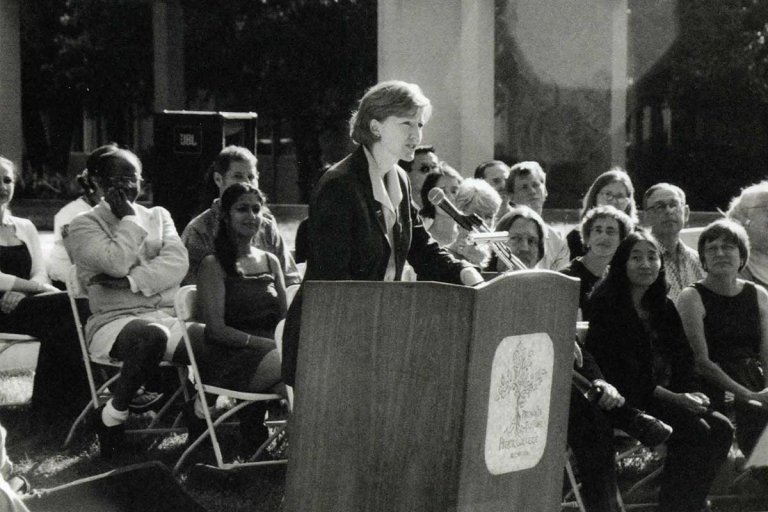
Near the beginning of the new millennium, the Board of Trustees accomplished their most inclusive search yet when they invited Laura Skandera Trombley to head Pitzer College. A scholar, educator and administrator from Coe College, she was charged with realizing the Master Plan: to transform the face of the campus as well as the dynamic of residential student life.
Shifting from the more subjective internal hallmarks of merit from its past, Laura Skandera Trombley focused on the realization of conventional measures while confidently promoting the College and the value of liberal arts to achieve traditionally calculated benchmarks of success. As a skillful fundraiser, eloquent and inspiring speaker and Pitzer's longest-standing president, Laura Skandera Trombley engaged with and left impressions on every facet of the College community.
View all the items in this exhibit