When Walls Are Witnesses
Pitzer’s public art not only celebrates the beauty of the campus, it reflects a shared heritage and set of values

When Peruvian artist Yandos Rios raised his brush to start a scene atop Avery Hall in 1973, a tradition of mural-painting began at Pitzer. Rios and a group of students created a joyous, vivid work of art known as the “Serpent Mural.” Though the mural was short-lived — it was painted over — Rios would return to Pitzer and recreate it in the same spot in 1996, more than 23 years later.

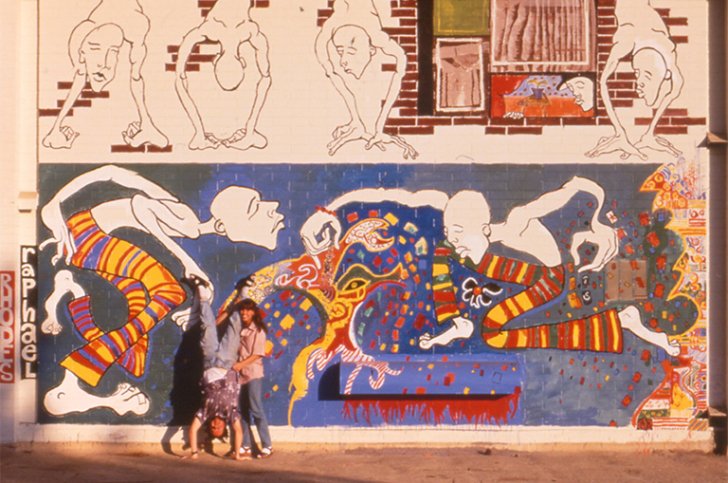
Rios’ original mural may have been the college’s first, but the oldest still in existence is the one above Mead Hall’s west-facing entrance. It was painted by two art students, Aaron Rhodes ’97 and Darci Raphael ’97, a year before Rios returned. Their mural — along with the arrival of Los Angeles muralist Paul Botello as artist-in-residence — became the catalysts of a mural boom on campus. What soon followed were many others created along the walkway columns that once lined The Mounds. Even with the removal of those columns (and the murals), the boom has continued. Today, Pitzer has more than 50 murals on campus.

It isn’t uncommon to find murals at many colleges. One can see some on other campuses of The Claremont Colleges. But Pitzer’s approach has deeply integrated mural painting (and other forms of public art) into the campus’ communal life over the past 52 years. Each year, murals are added to the exteriors of lecture halls, administration buildings, and residence halls. During the current academic year eight new murals have appeared.
As the number of murals has increased, the need to keep track has grown. To that end, a campus murals map now exists that was created by the Pitzer College Art Galleries staff and its Gallery Fellows.
Who is eligible to paint a mural?
“Any community member can propose the installation of a mural or other outdoor artwork, not only students,” said Melissa Burrows, assistant director of student success initiatives & operations and the current chair of the Campus Aesthetics Committee (CAC).
Murals are approved through a process involving CAC, and students are heavily involved and hold five voting spots on the committee, Burrows added — another example of how Pitzer’s governance model enables students to leave their mark on the campus (in this case, literally).






On the Cover
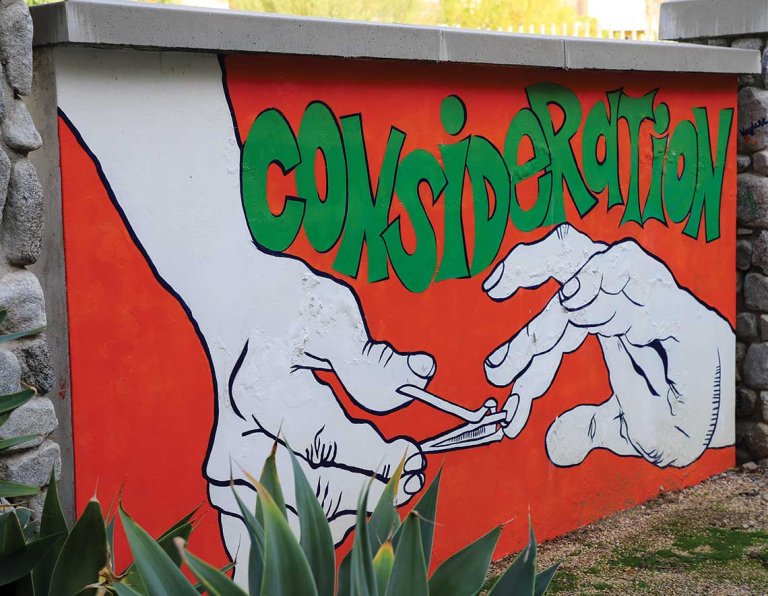
The cover of the print issue of The Participant features details of murals across campus.

Take an Interactive Mural Tour
Learn More
Explore murals on campus and learn more about this special Pitzer tradition.
News Information
Published
Author
Nick Owchar
Organization
- Campus Aesthetics Committee (CAC)
News Type
Related News
All News