
The Murals of Pitzer College
Learn about the murals that make Pitzer College's campus so unique, embodying the spirit of student engagement and artistic expression found in our campus community.
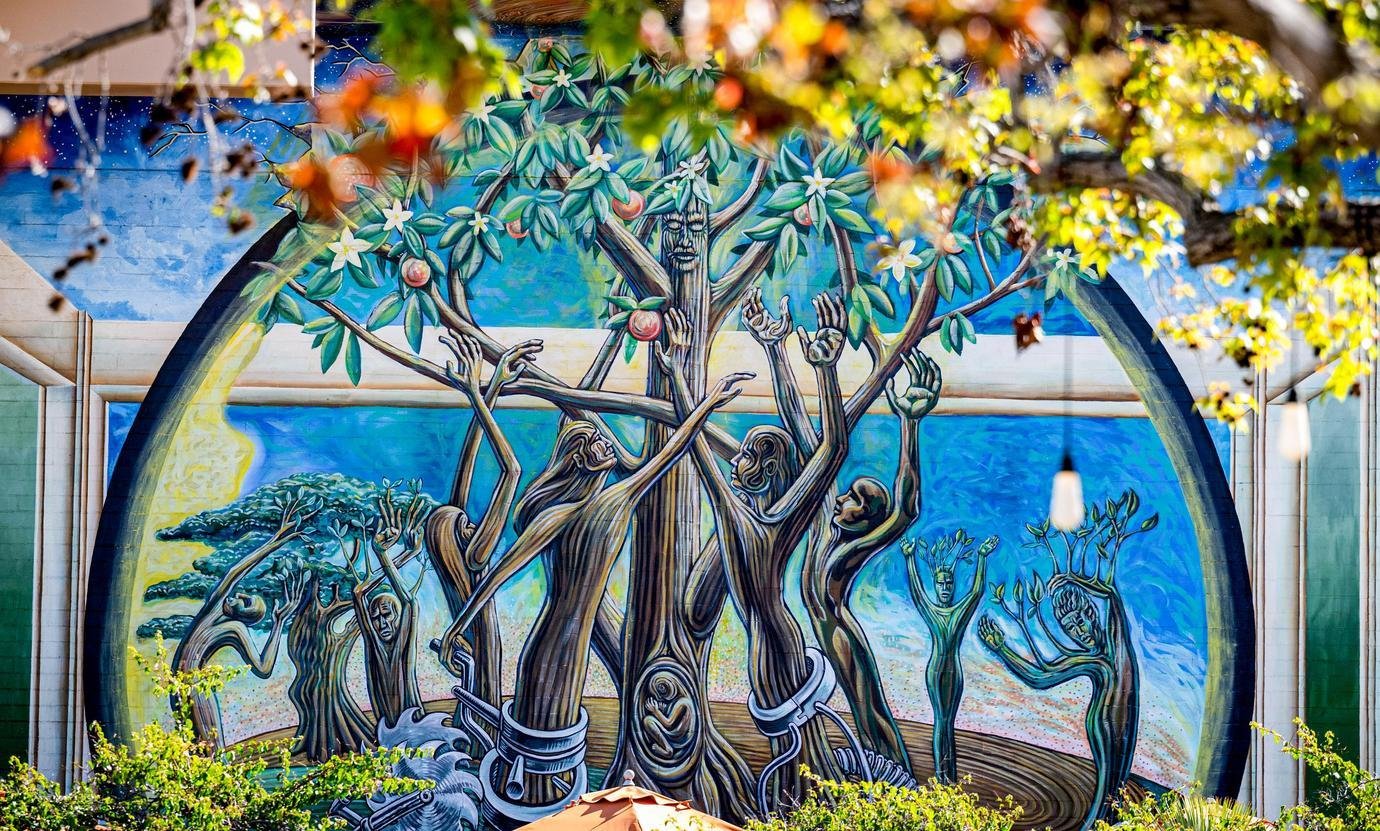
"I always tell my tours that the murals you see around campus will give you a greater sense of the true Pitzer student and community member better than maybe my words can. The murals tell the story of who we are, what we stand for, and what matters to us!"
Dey Wallace-McKinstry ’25
Psychology and Political Studies major
Students have been leaving their mark on the College landscape since the early 1970s.
History
Murals are an integral part of the Pitzer College campus landscape. The first mural was painted in 1973 by Yandos Rios, and in the 1990s, murals became a lasting unique feature of the College's environment.
1970s: Early Beginnings
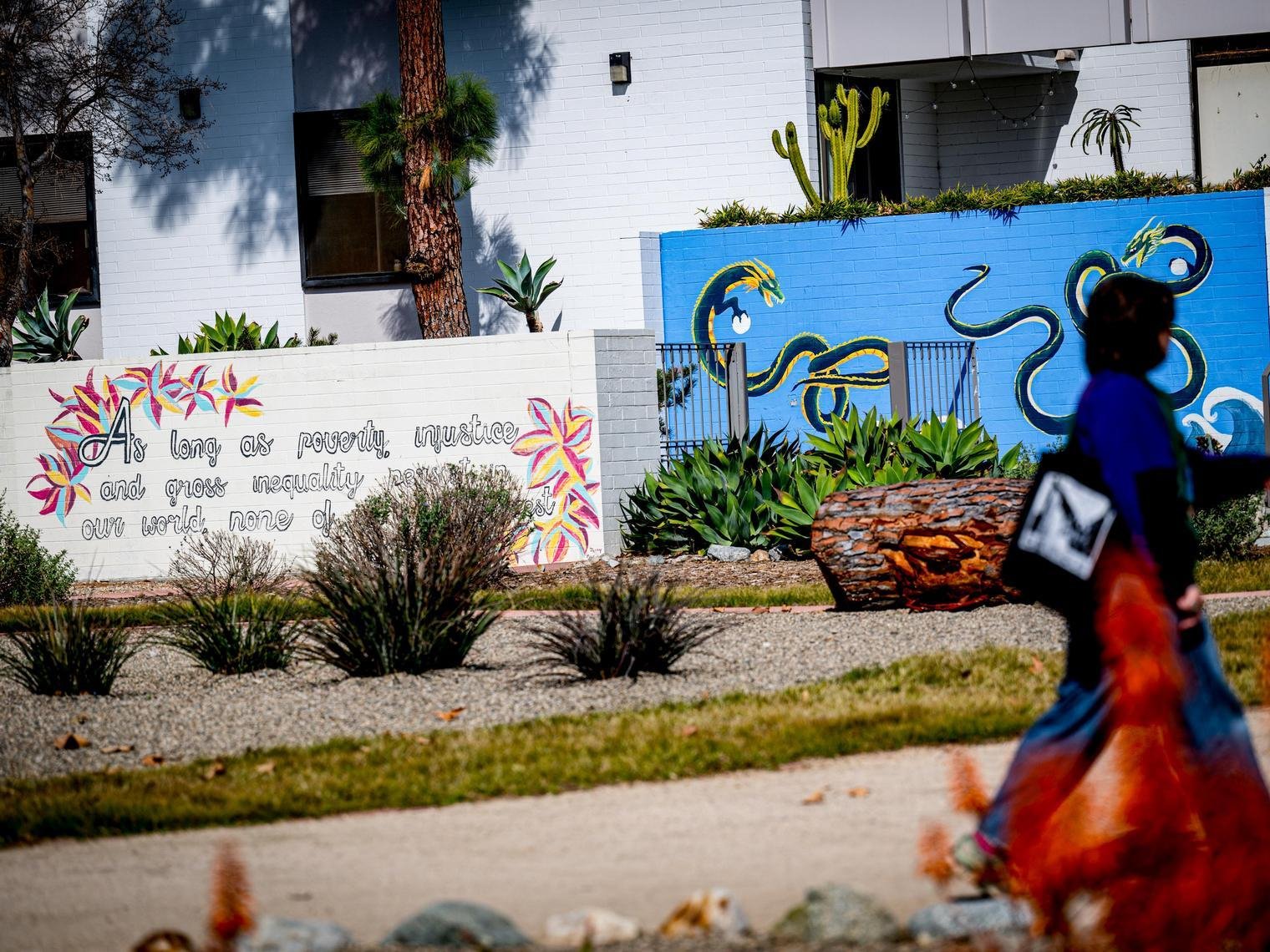
In 1973, Peruvian artist Yando Rios and a group of students painted the college’s first mural atop Avery Hall, often called “Serpent Mural.” Although the original mural was painted over, Rios recreated it again in 1997. Roof access to Avery Hall is prohibited, but the mural can be seen in aerial photographs and drone footage of the campus.
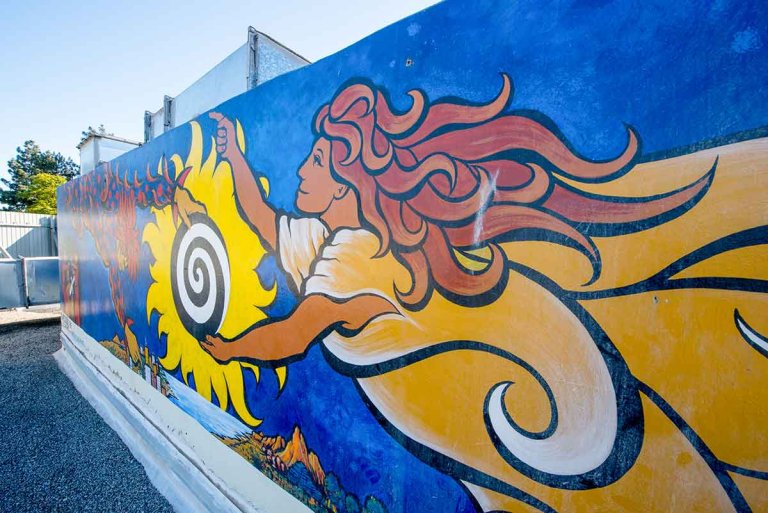
1990's: The Mural Revolution
Fast forward to the true beginning of the Pitzer community's artistic revolution. In the middle of the night in 1996, Aaron Rhodes '98 & Darci Raphael '98 created an unauthorized mural over Mead Hall's main entrance.
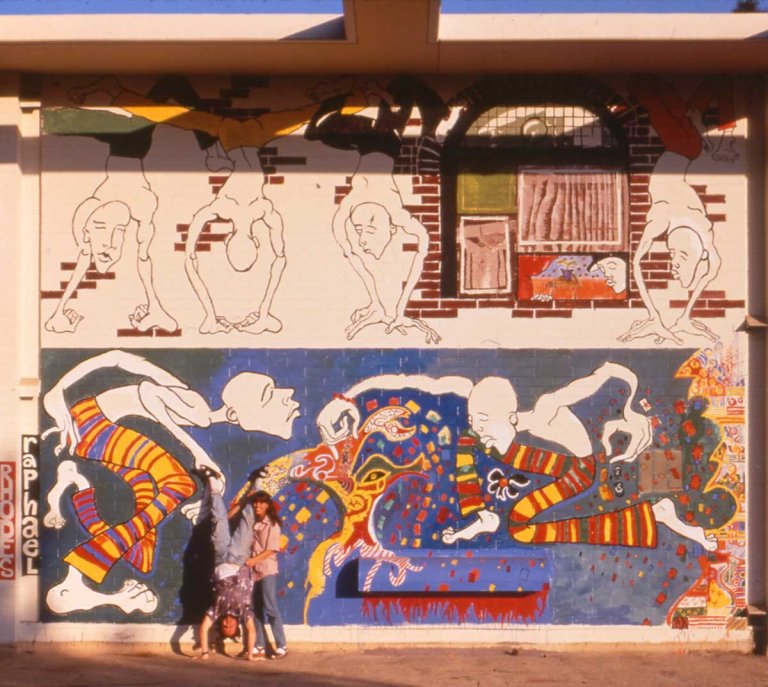
After much community discussion and town hall meetings, it was decided that the mural could stay. The conversation led to the creation of a Public Art Policy and a campus Outdoor Art Committee, later renamed the Campus Aesthetics Committee, paving the way for the murals seen on campus today.
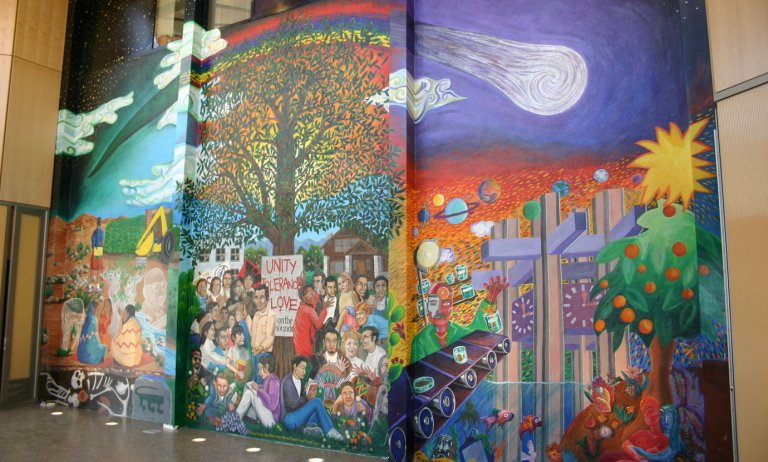
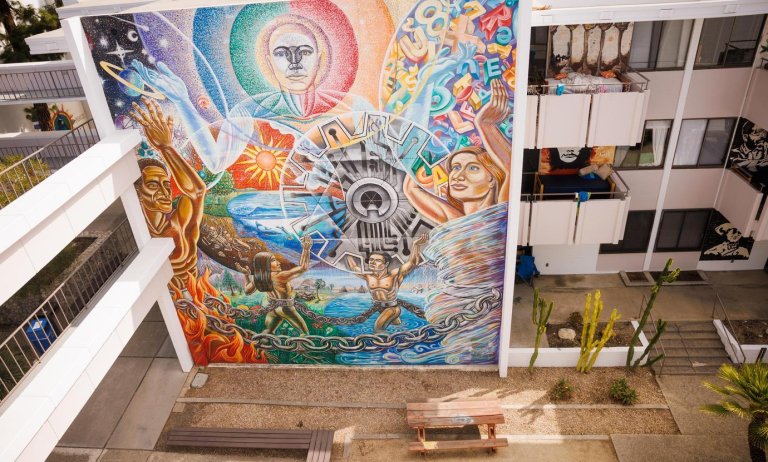
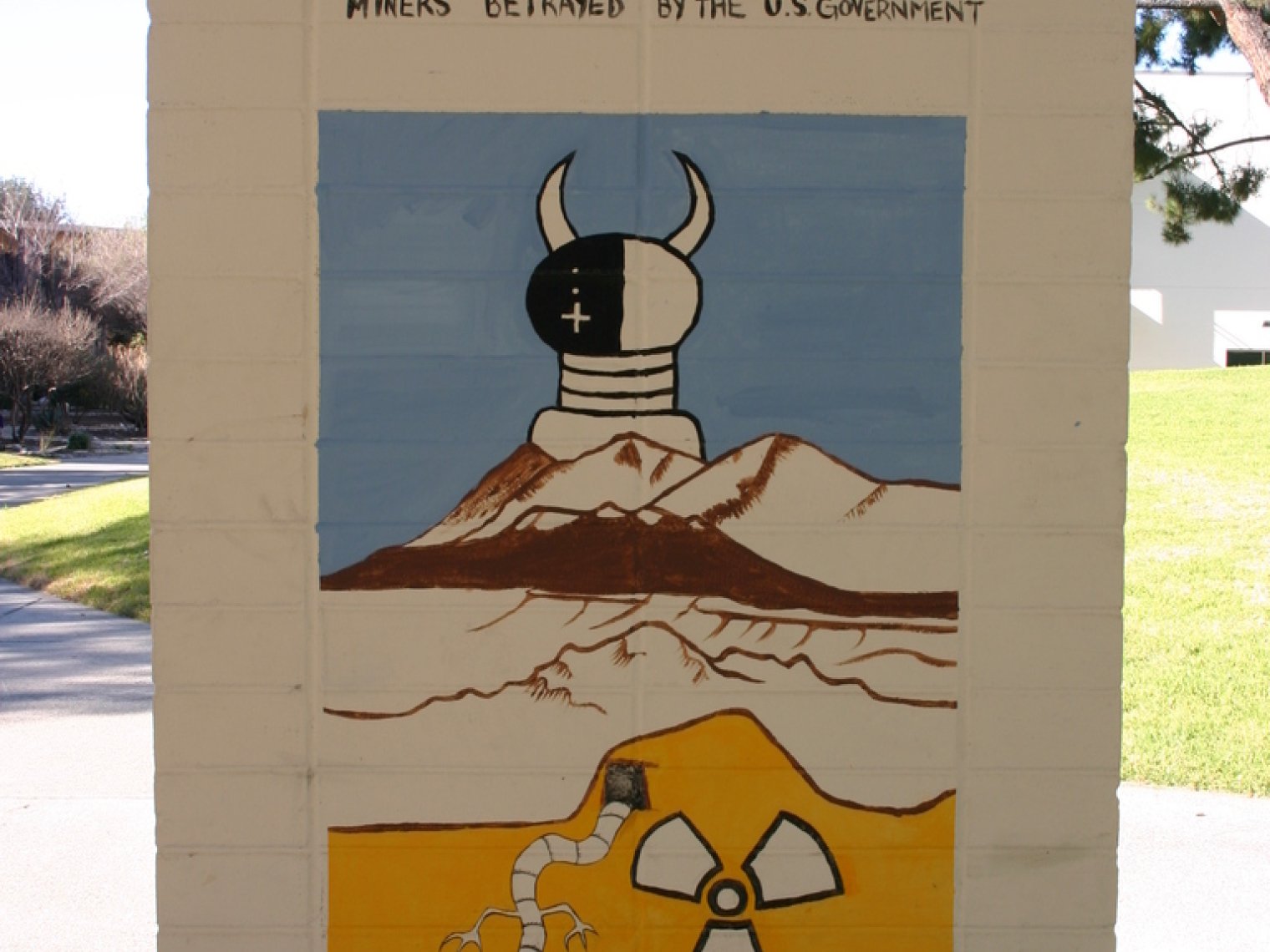
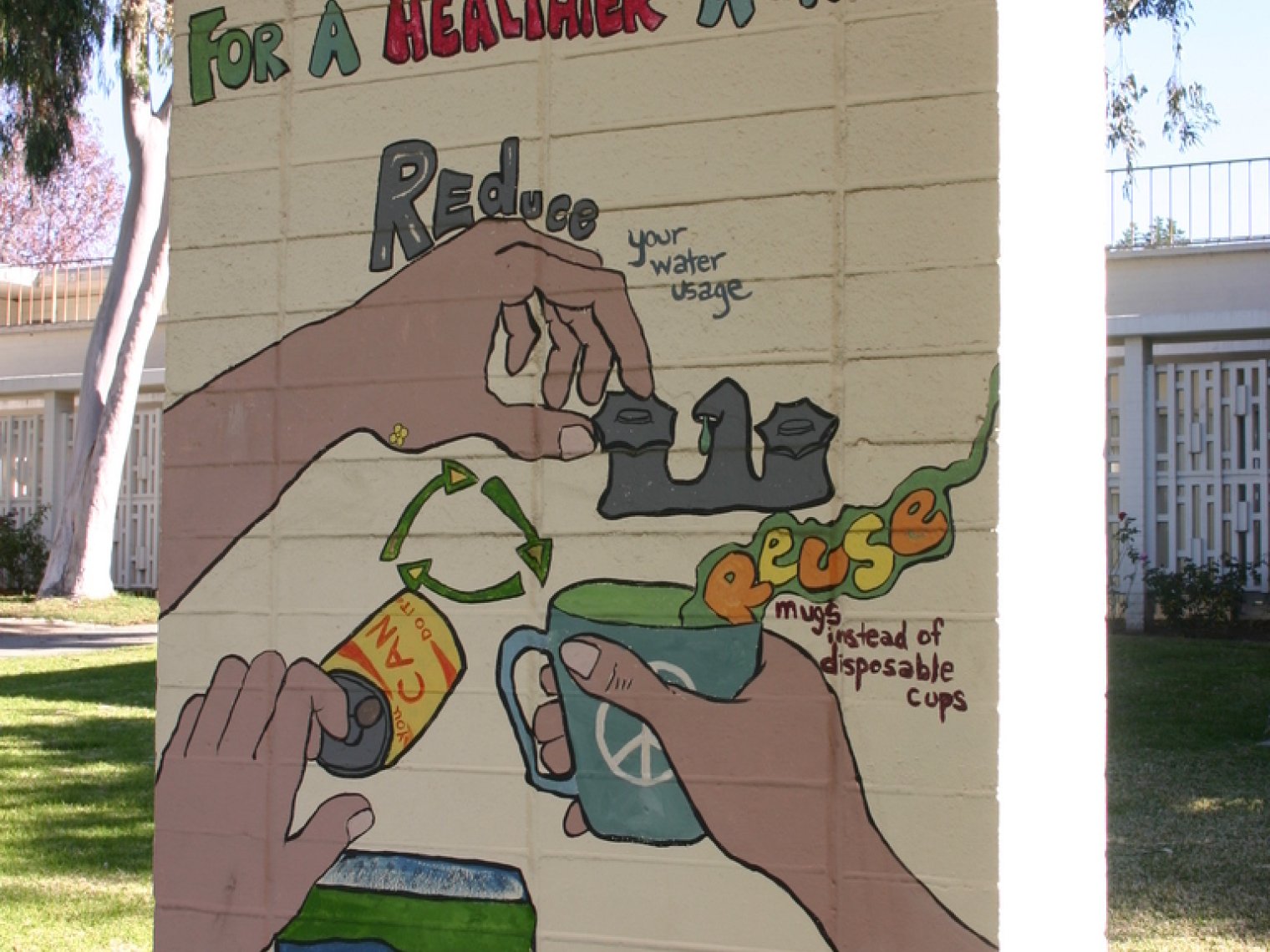
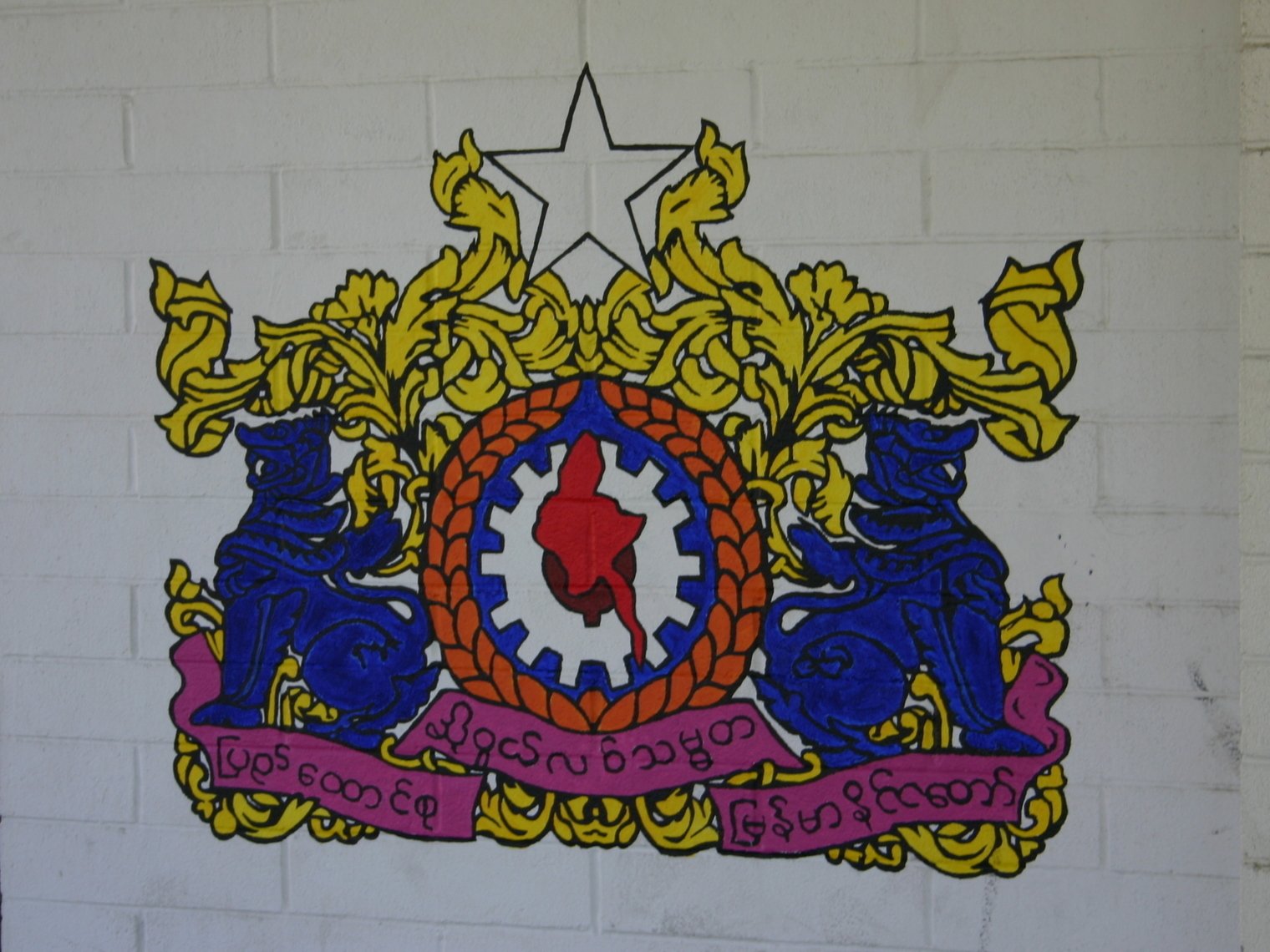
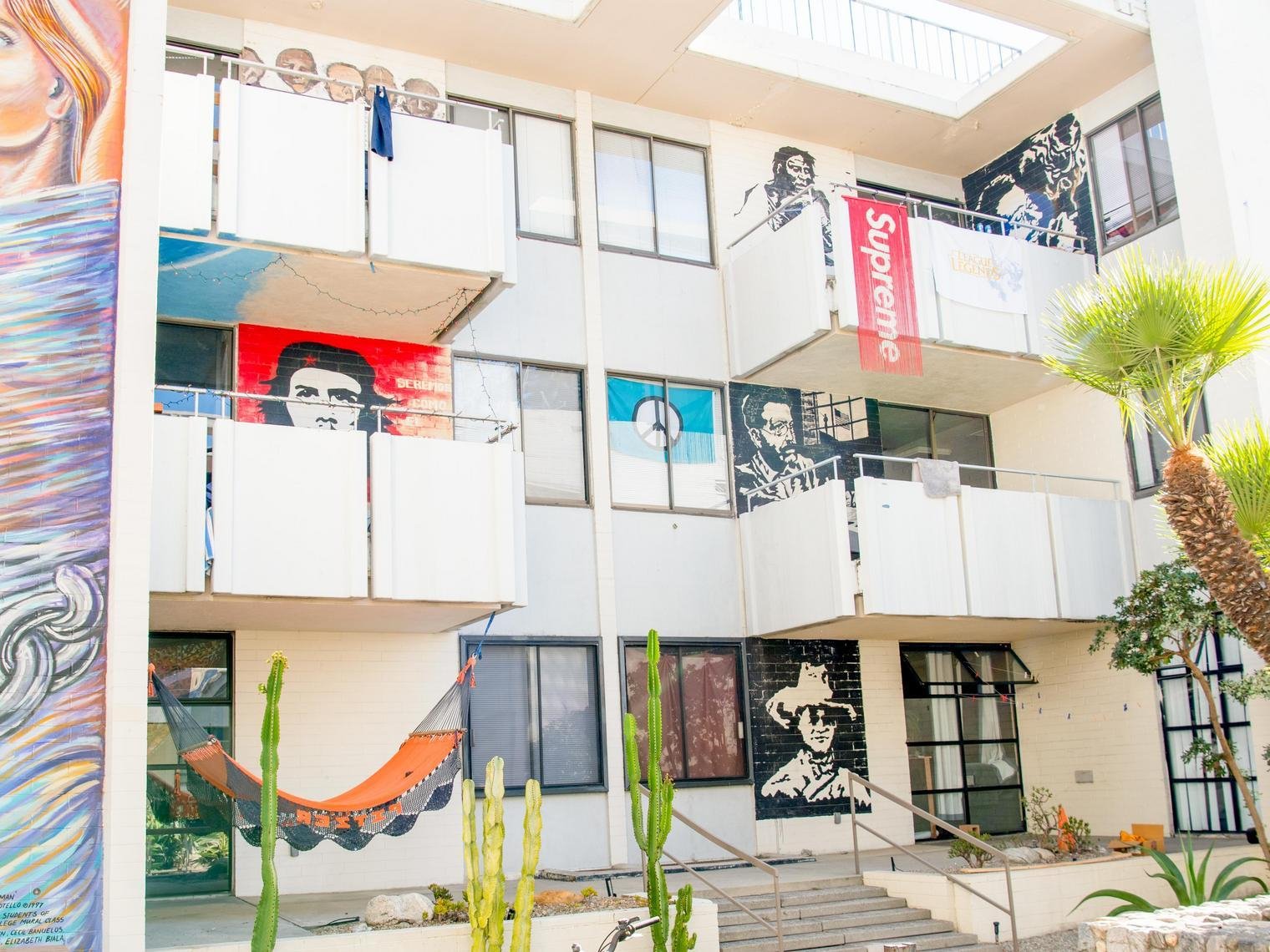
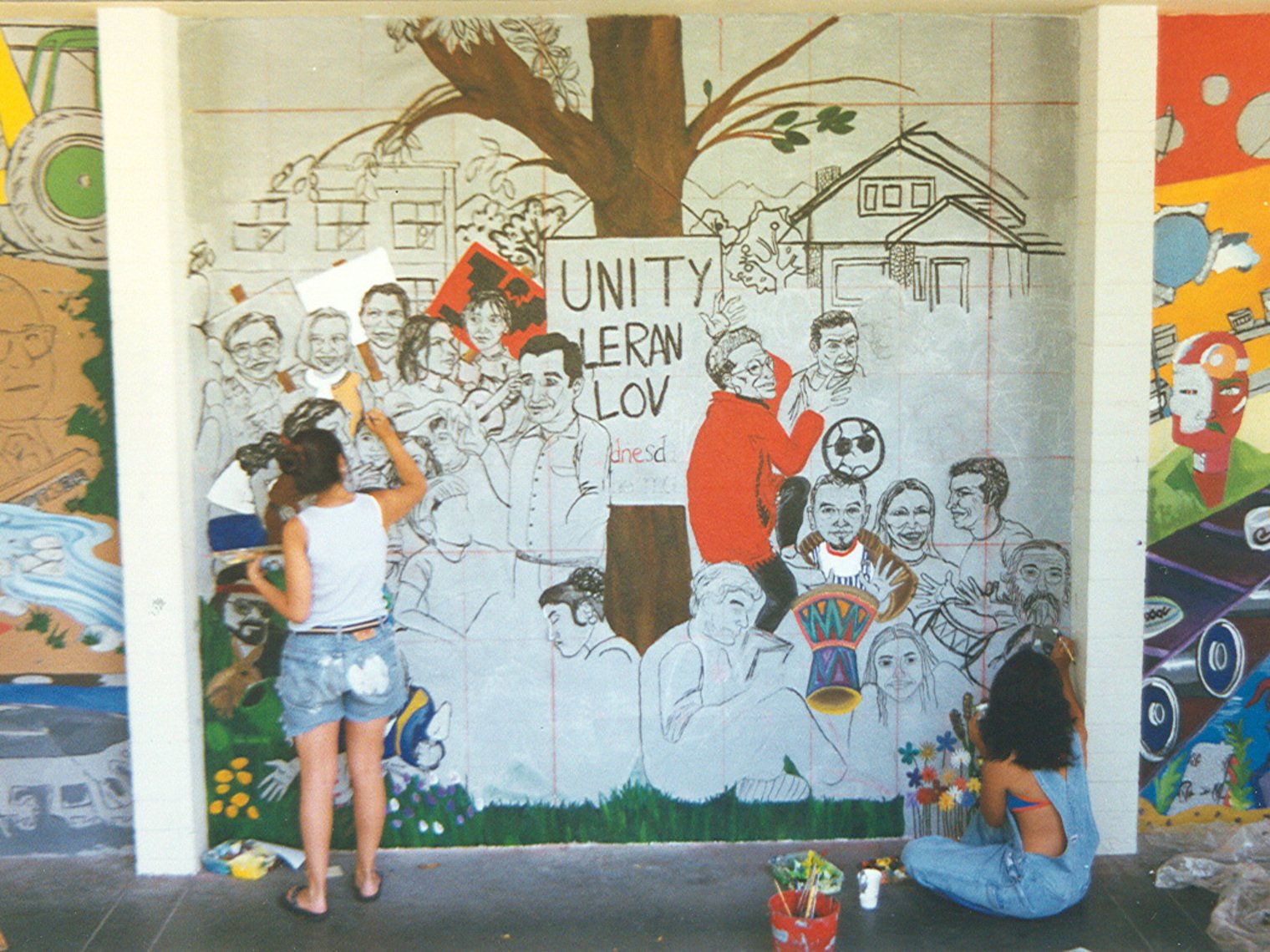
In 1997, visiting professor and renowned muralist Paul Botello taught the class "Murals, World Wall Art," resulting in Botello's Interhueman mural on Mead Hall and the student-led Past, Present, Future mural located on the outside of Benson Auditorium, truly ushering in this new form of student engagement.
Present-Day
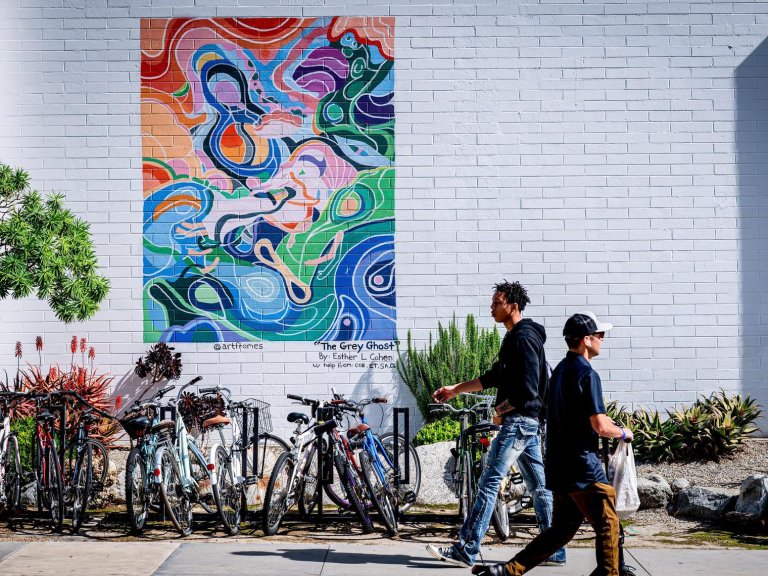
If you have an idea for a mural, it can be proposed to the Campus Aesthetics Committee, a group of students, staff, and faculty that oversees the Public Art Policy on campus.
Proposed murals go through a review process, and if and when approved, artists are given a deadline to complete the artwork.
What will you paint at Pitzer?
Mural Gallery
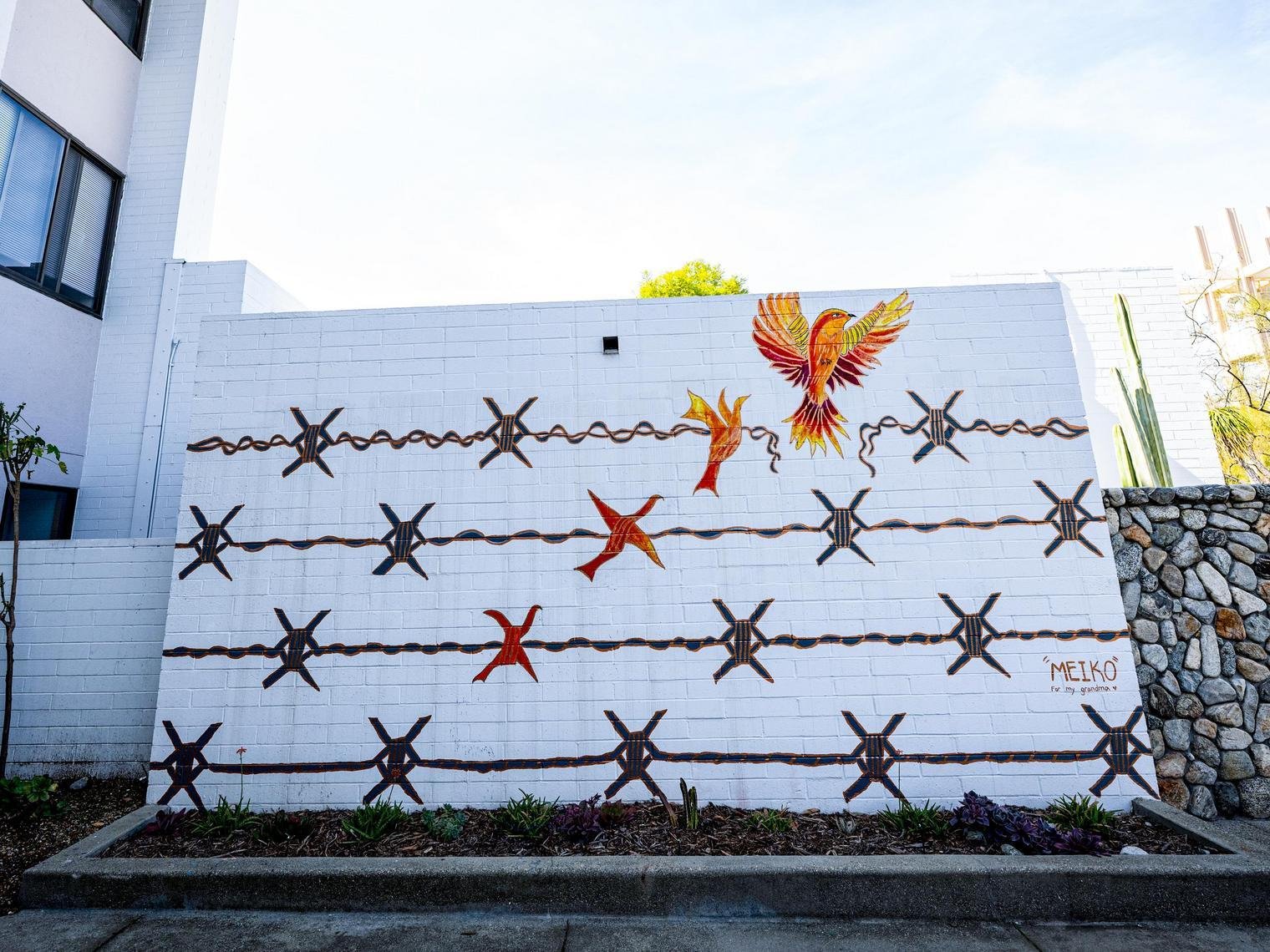
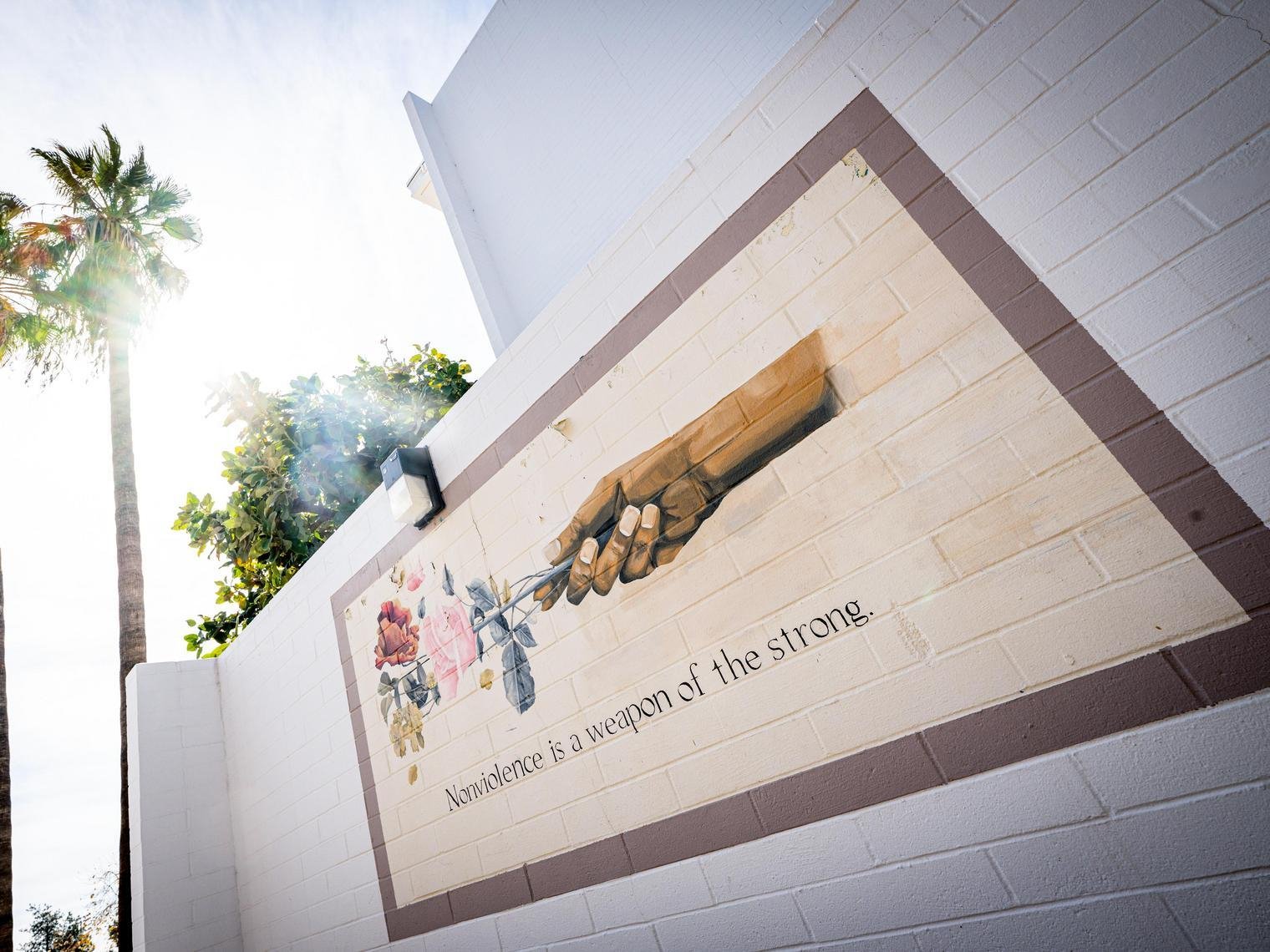
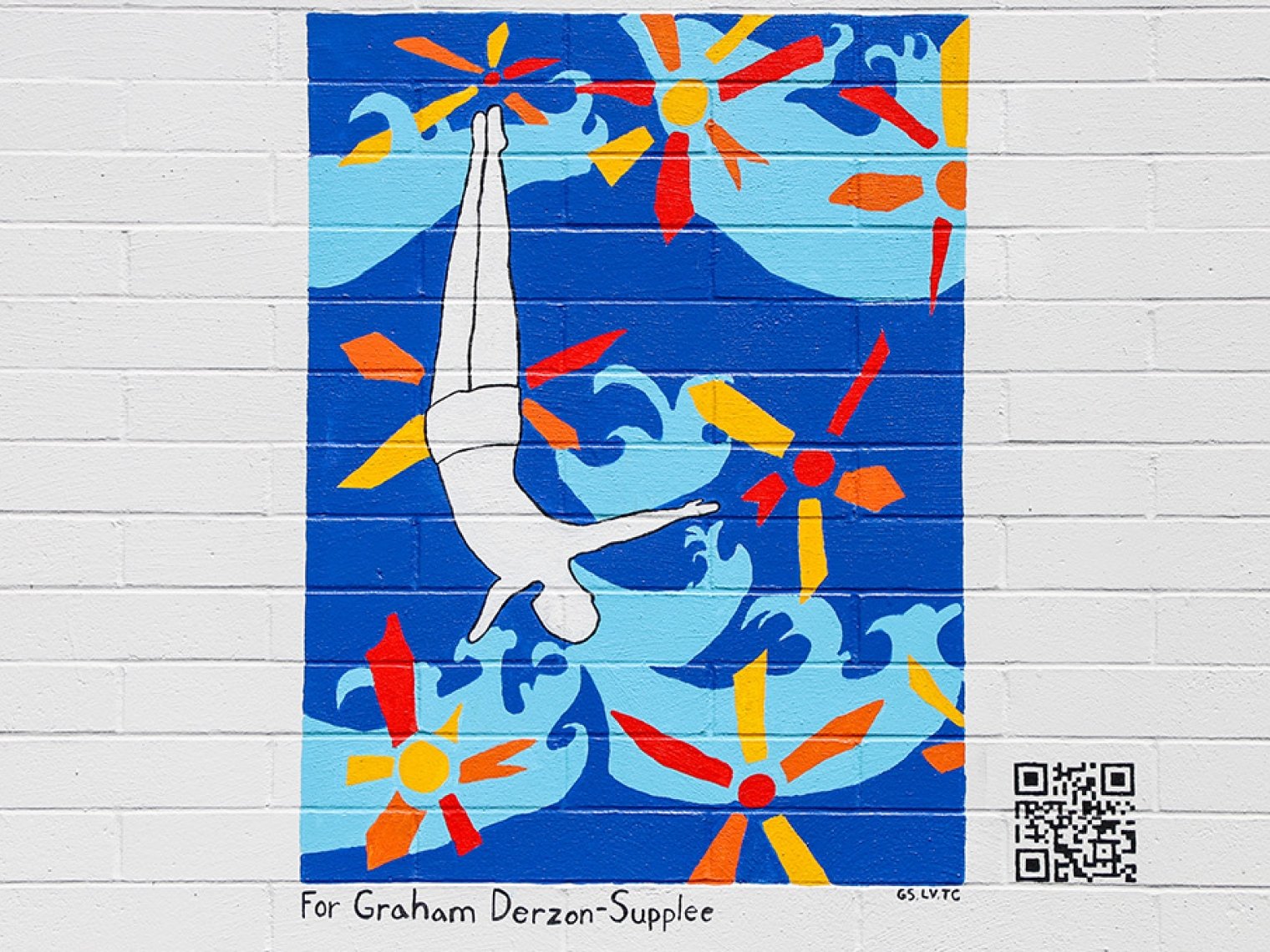
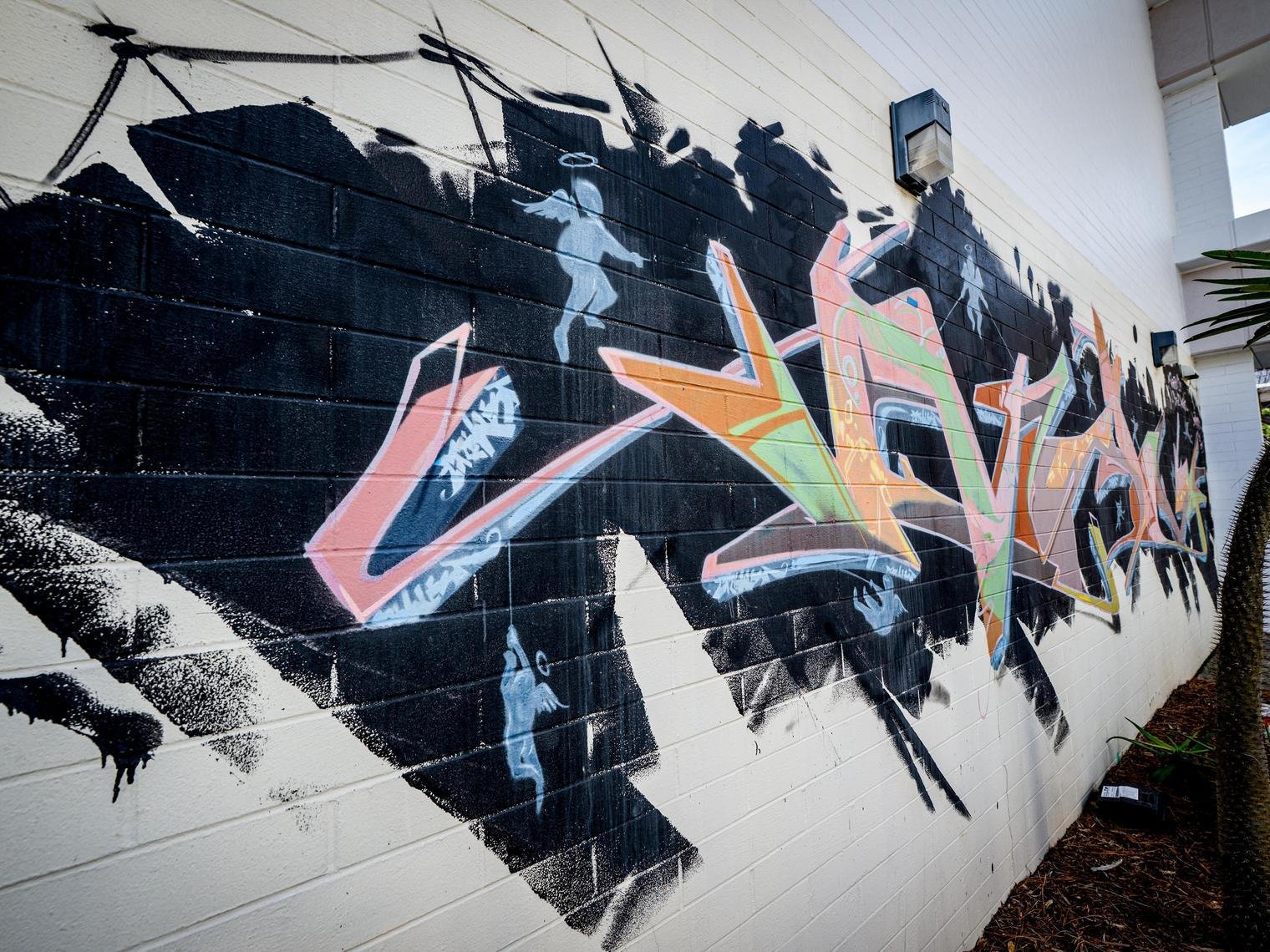
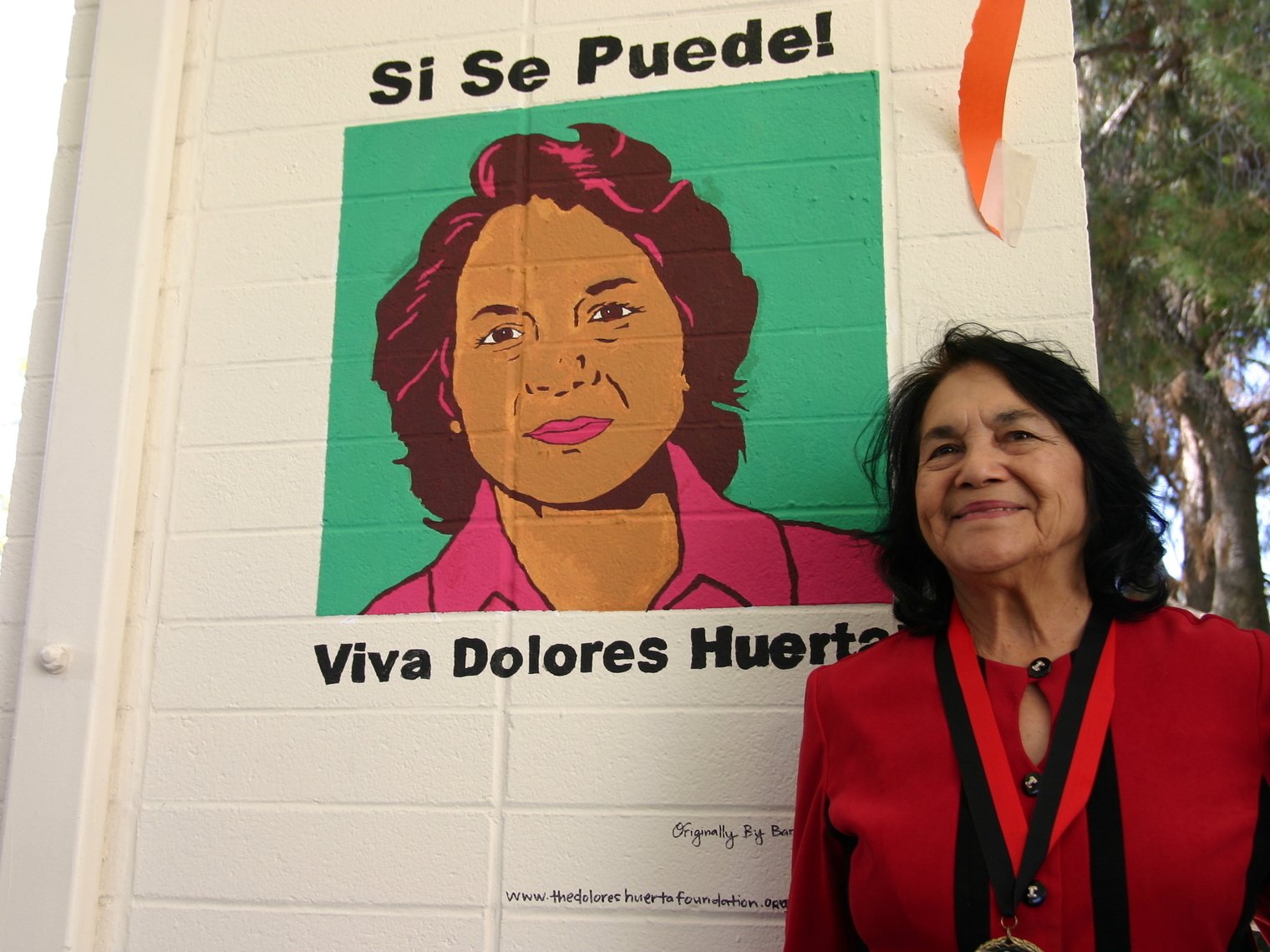
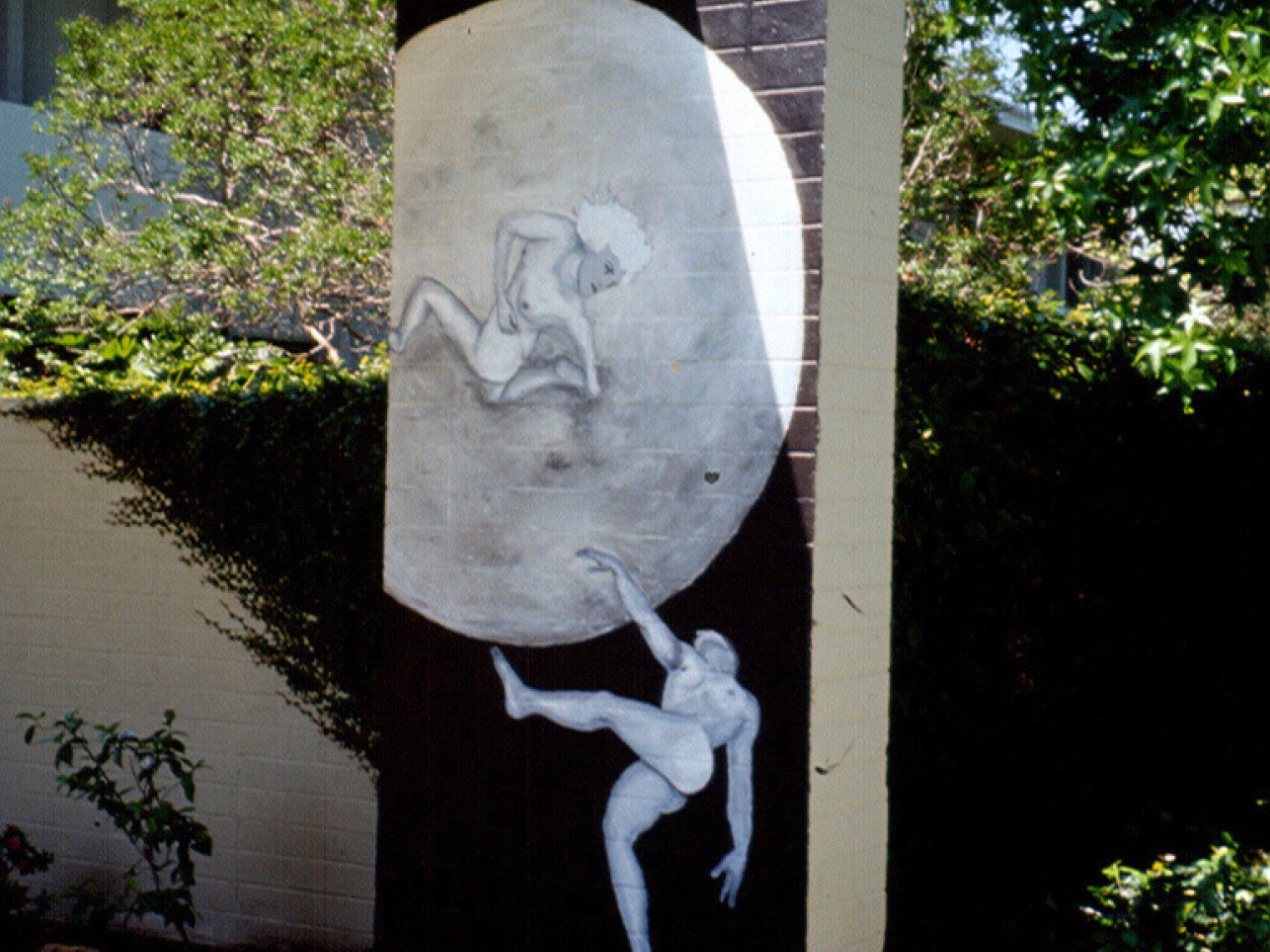
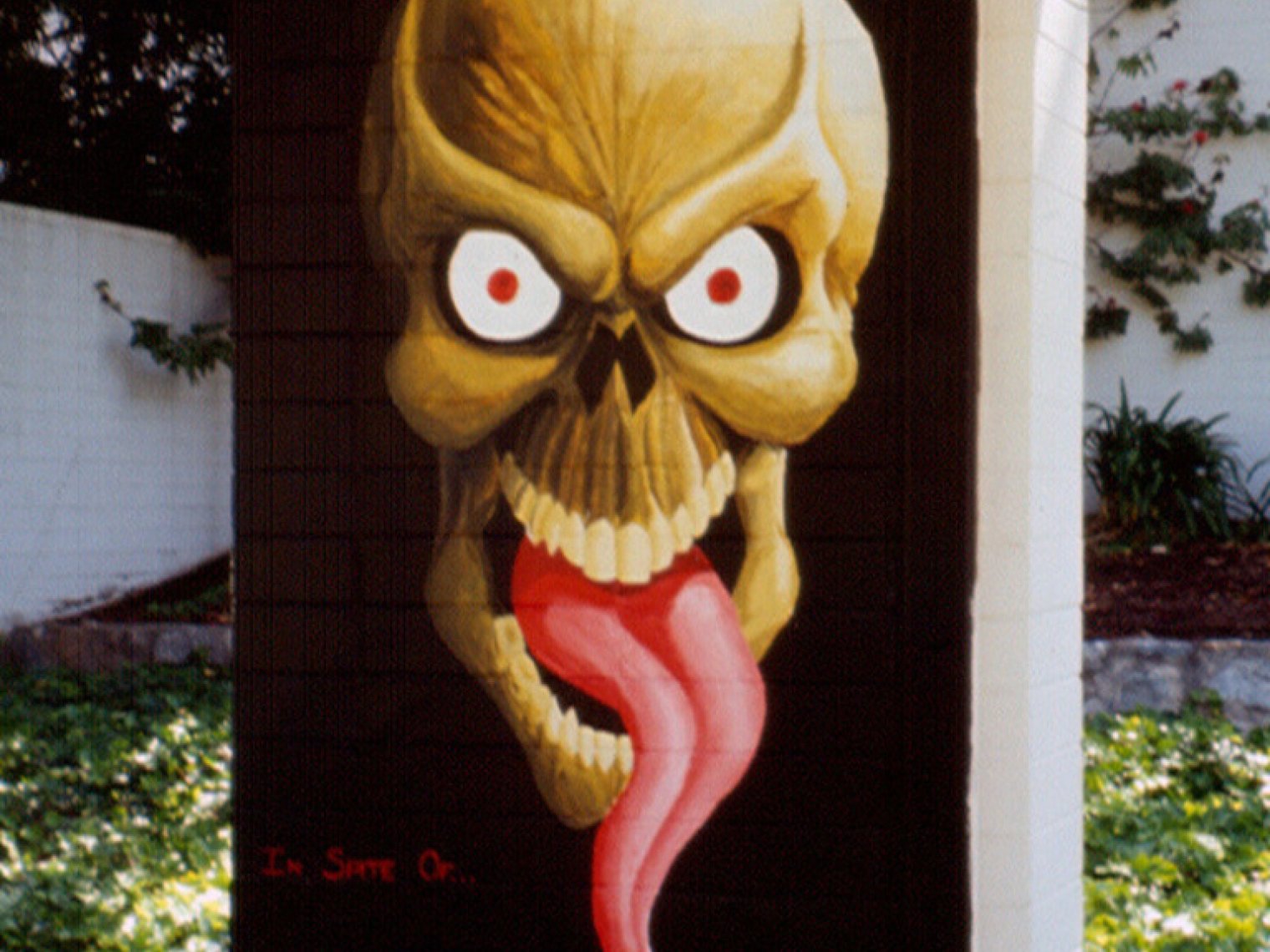
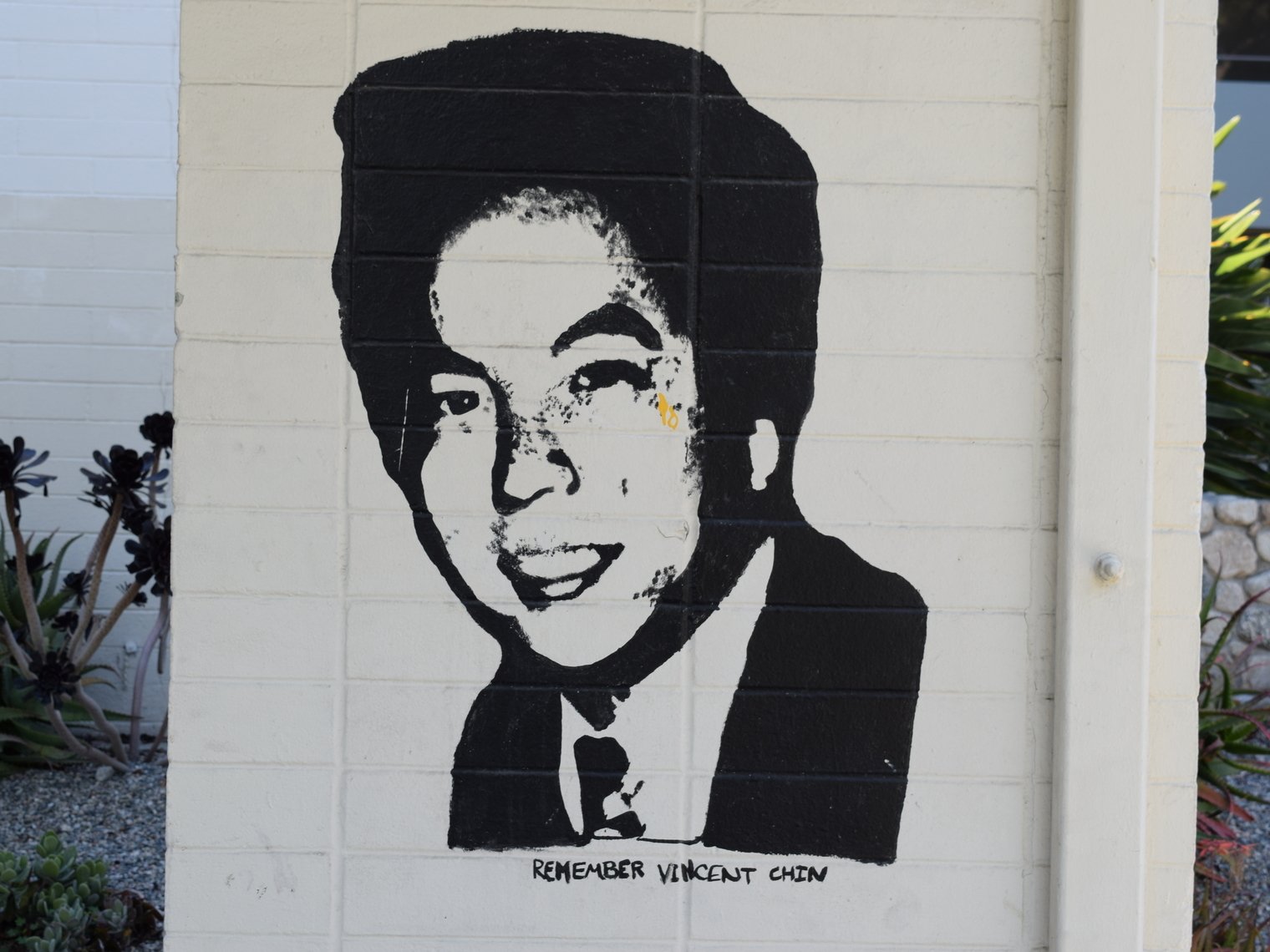
Browse a selection of Pitzer murals past and present that have helped make our campus environment so unique.
Explore Gallery gallery_thumbnail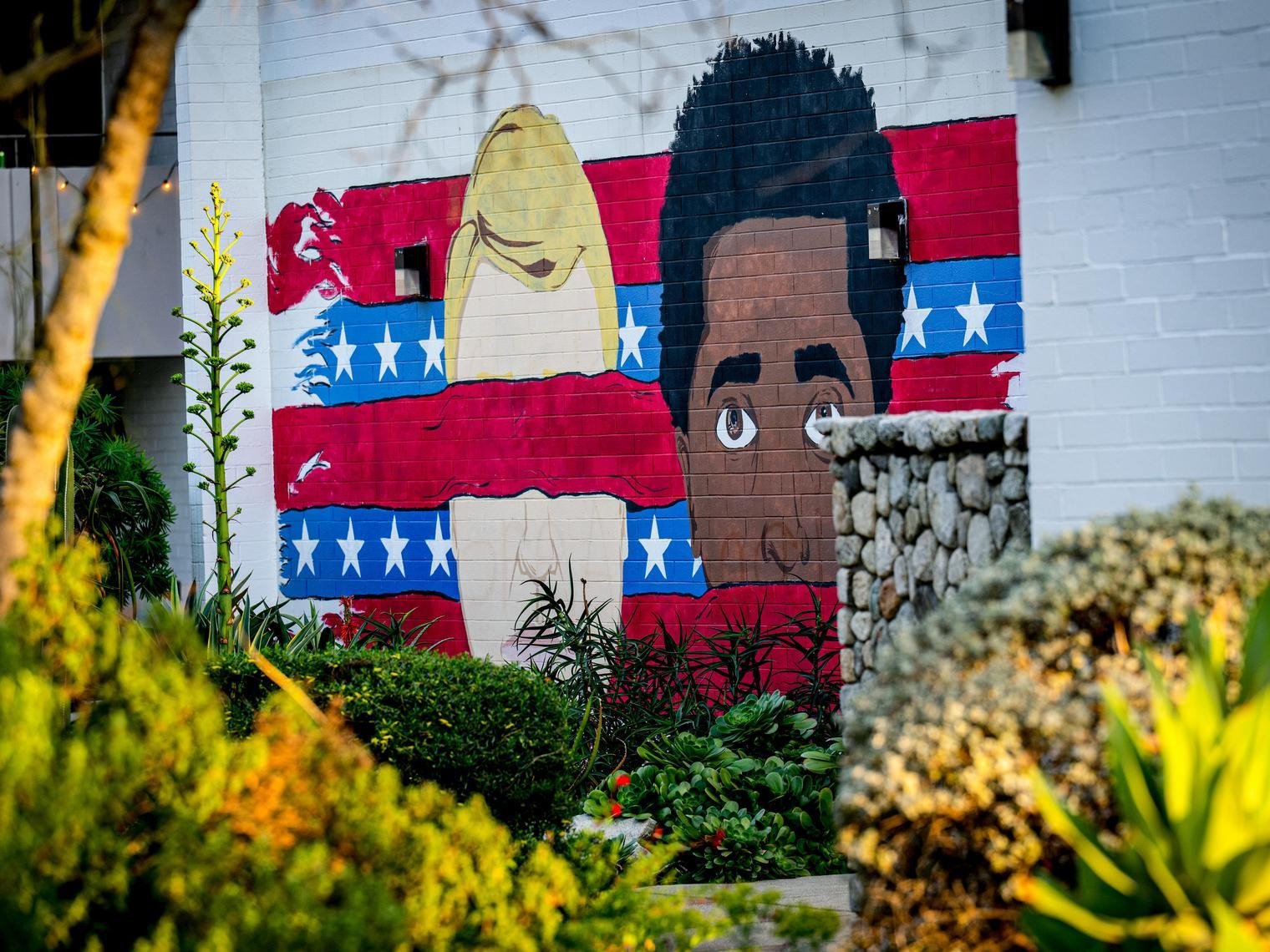
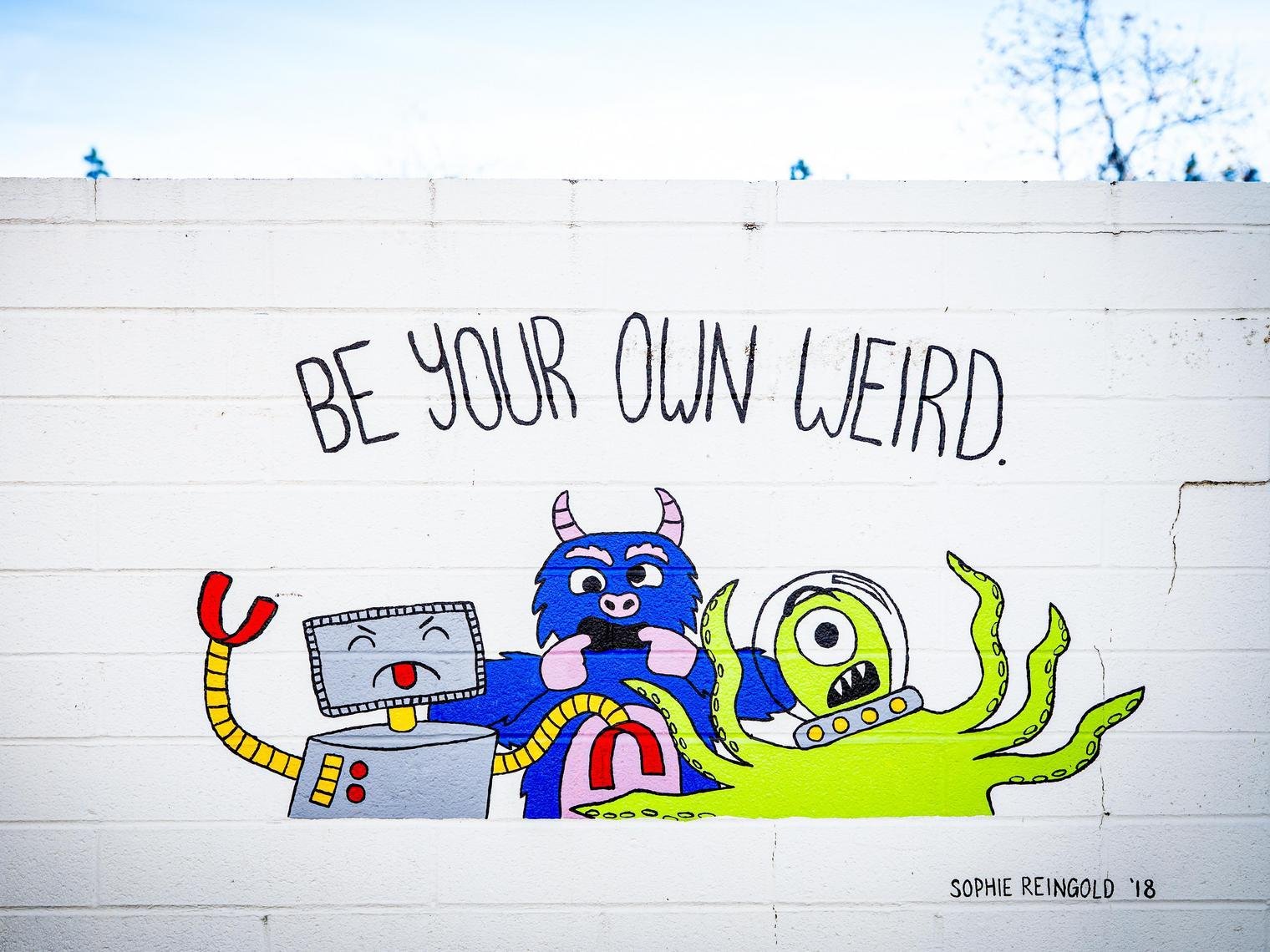
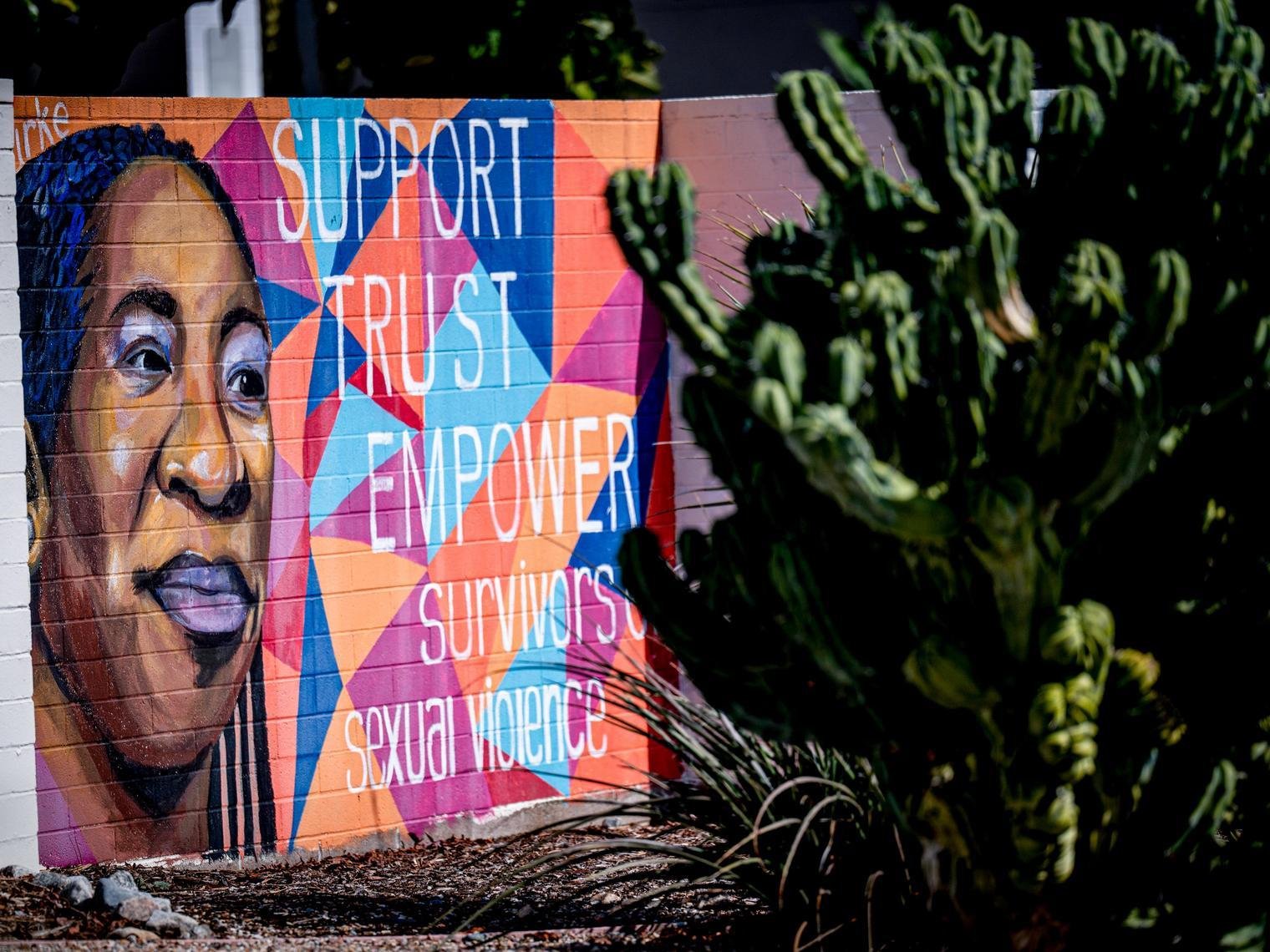
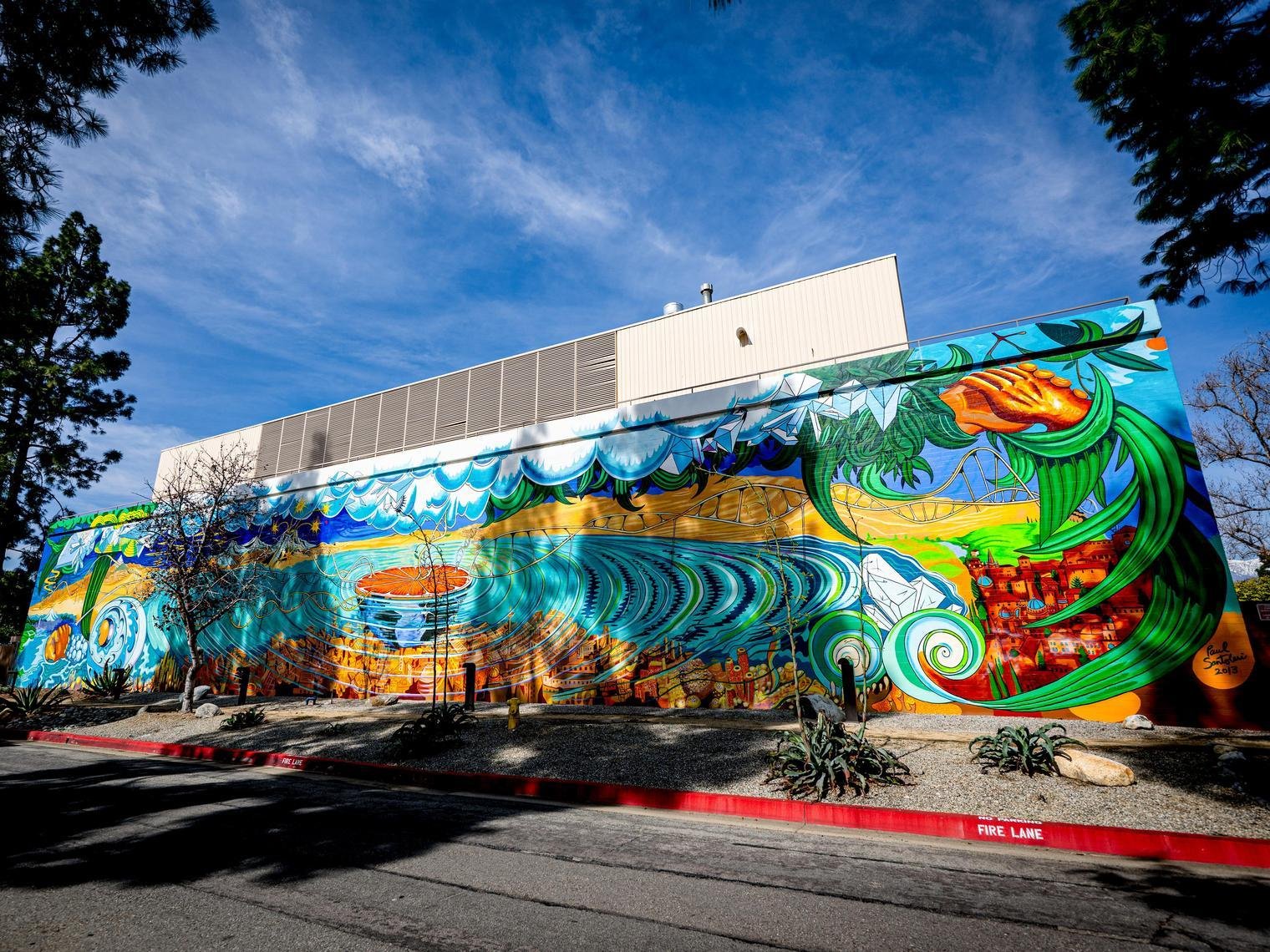
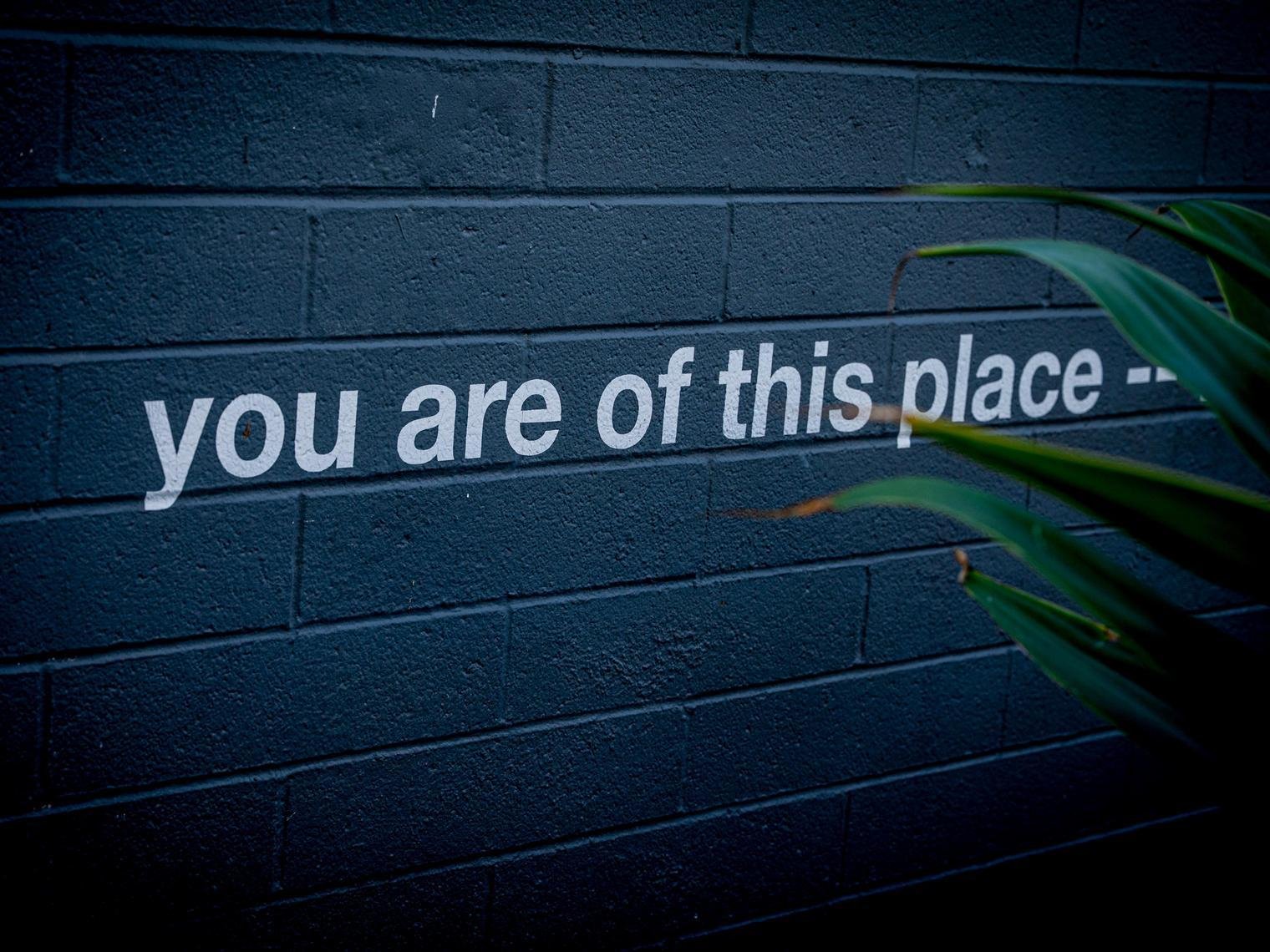
Featured Mural
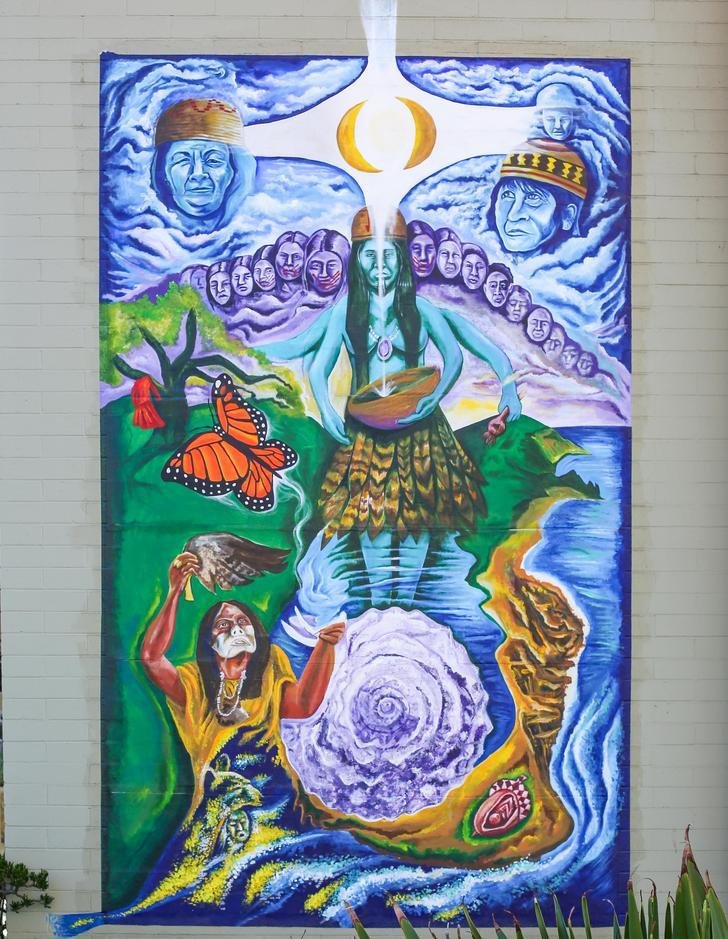
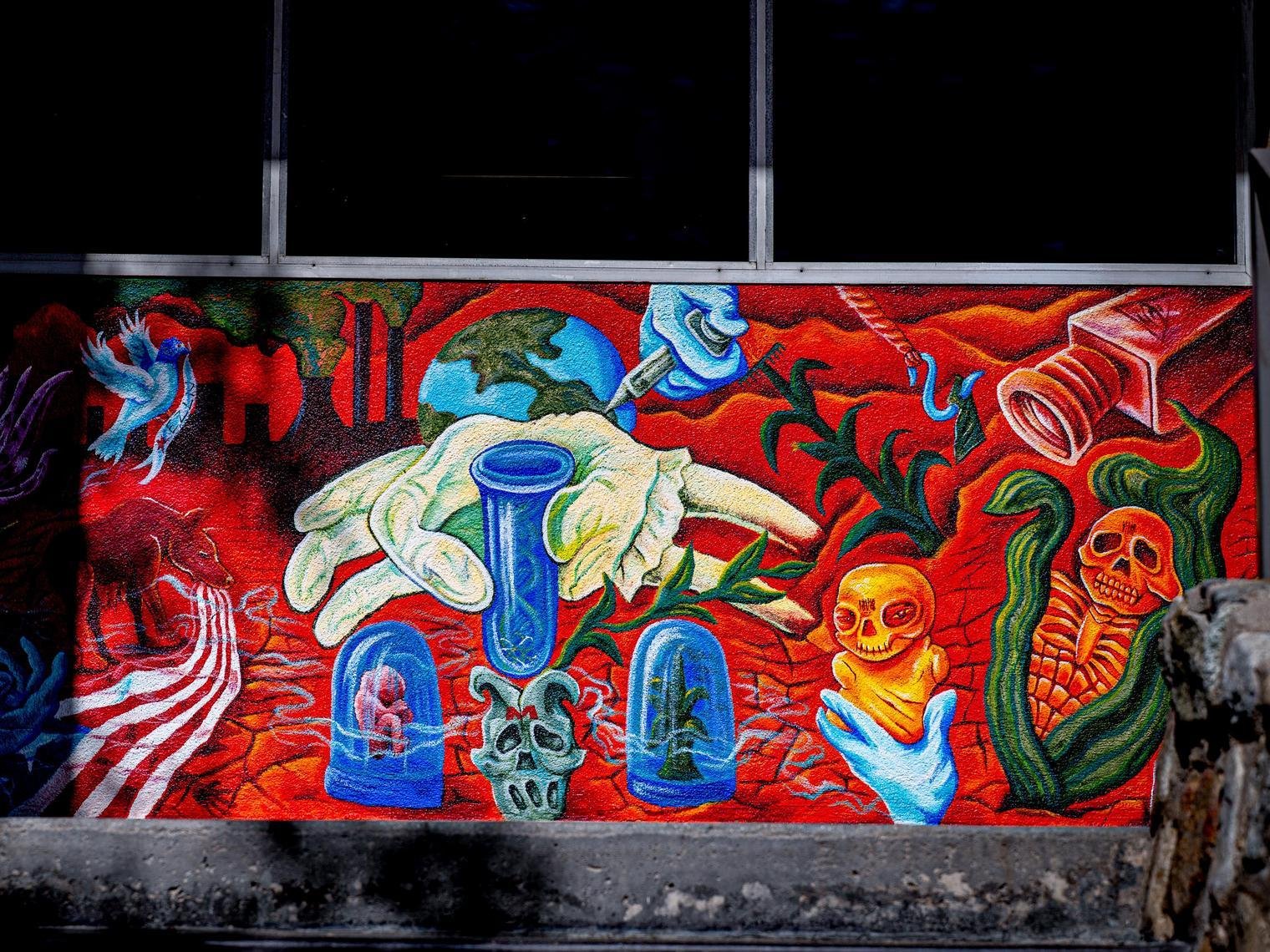
"To Be Visible," 2019-20
To Be Visible commemorates local singer, scholar, and activist Aleyah Toscano, who served the community through the Native Youth to College scholar program and pays homage to murdered and missing indigenous women. It depicts the Tongva story of “No-Moon” and “First-Moon," twin sisters whose story is used to teach women how to protect and empower each other.
Artist: Joe Galarza in collaboration with Julia Bogany
Take a Virtual Tour
The Free Wall
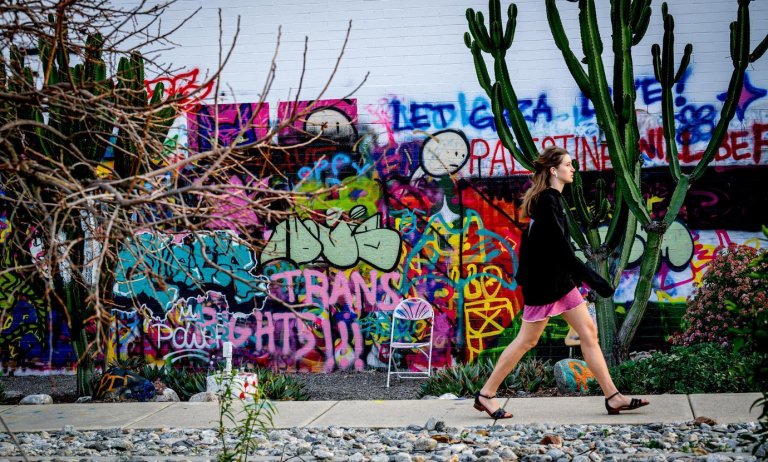
Pitzer's Free Wall, located on a north-east wall of Mead Hall, is the one location on campus where students are free to create public art without going through the Aesthetics Committee process. This wall is ever-changing and provides a glimpse into current events and topics important to the student community.
Decommissioned Pitzer Murals
Not all of Pitzer's murals have survived throughout the years. Due to demolished building structures, weather erosion, or time-limited approvals, some murals no longer exist. The Claremont Colleges Digital Library has an extensive archive of Pitzer's murals, past and present.
View the Archive
Pitzer's Murals in the News

Featured
When Walls Are Witnesses
Pitzer’s public art not only celebrates the beauty of the campus, it reflects a shared heritage and set of values