10 Tips From Pitzer’s Writing Center
Peer-to-peer support at the Writing Center is available for any genre and any stage of the writing process.

Need help with college writing? Whether you’re a first-year student or a senior, you can find support for writing and communications at Pitzer’s Writing Center.
See 10 tips from the Writing Center to make the most of this resource:
1. Book an appointment or drop in anytime at the Writing Center
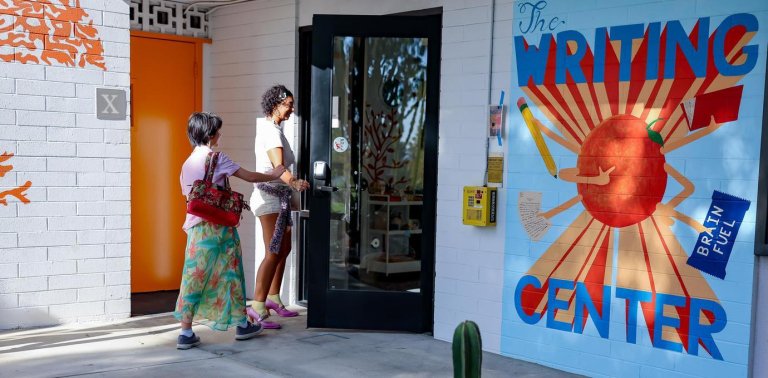
The Writing Center at Mead Hall 131 offers both in-person and online appointments for one-on-one guidance. You can schedule appointments for writing projects, fellowship applications, multilingual support, library research, and more.
2. Come during any phase of the writing process (even brainstorming)
You can visit the Writing Center without typing a word. Students regularly seek help to discuss ideas, decipher an essay prompt, organize a first draft, or polish a final draft.
3. Bring any genre
You can bring any kind of writing to work on:
- Academic papers
- Senior thesis
- Creative writing
- Lab reports
- Cover letters
- Applications for jobs, fellowships, or grad school
4. Practice rhetoric—AKA the art of persuasion
Learning to write should involve understanding and creating your audience with a clear sense of purpose. Consider how your written piece can make an argument, even if it isn’t an academic paper.
“[Understand] genre as something that’s not just about rules and conventions, though those are important, but writing as social action,” says Senior Director of College Writing and Professor of Academic Writing Andrea Scott.

5. Get to know the Writing Fellows
Writing Fellows are Pitzer sophomores, juniors, and seniors who are trained to consult with students across disciplines. You have over 30 Fellows to choose from for peer-to-peer support—in writing, academics, and student life!
6. Seek a specialist when needed
While all Fellows are trained to support various writing needs, you can also meet with specialists for specific genres. Look for the “Specialist” distinction under a Fellow’s name when booking an appointment.
Fellowship specialists can support students with writing a research proposal or applying for an internship, graduate school, or fellowship. STEM specialists can assist with scientific writing, formatting tables, and so on.
7. Think more broadly than the writing project
The Fellows walk you through a reflective process in your writing—particularly for personal statements. As you explain your purpose behind a sentence, you delve into your thinking process and sense of self.
“Students are thinking critically about their experiences, what brought them here in the first place, and what is it that they want to do based off of those experiences,” says Writing Center Director Stephanie Liu-Rojas.

8. Write in community
Writing is a collaborative effort. Almost every published book has involved an extensive editing and writing process. It’s okay to seek help—in fact, it’s part of the process.
“Most professional writers do not write alone,” says Liu-Rojas. “There’s always someone there giving them feedback.”
From reading clubs to writing workshops, the Writing Center also hosts events throughout the year to build community. Stay tuned with the Writing Center’s upcoming events.
9. Write in an environment that works for you
As soon as a student walks into the Writing Center, a Fellow will ask where they would like to sit. You can choose from consulting in a quiet room, relaxing in a comfy chair or couch, or sitting at a table. Everyone’s learning and writing styles are different. Fellows are ready to accommodate these styles to facilitate support.
“Anyone can write,” says Liu-Rojas. “You just have to understand what works for you in your process. We’re able to help you determine what that is.”
10. Get guidance when considering AI usage
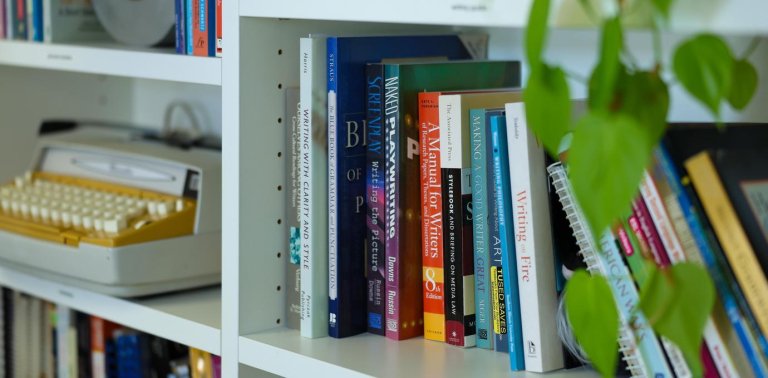
Large language models can be a way to brainstorm or synthesize thoughts. However, not all AI usage is ethical or helpful for learning. Visit the Writing Center for guidance on where AI does and does not belong in the writing process.
No matter where you are on your writing journey, the Writing Center is always ready to welcome you to a beautiful, sunlit space in Mead Hall.
“We have tea, we have candy, we got coffee, we got stuffies, we got pillows, we got beanbags and swing chairs,” says Liu-Rojas. “Come check it out!”
News Information
Published
Author
Bridgette Ramirez
Organization
- Writing Center
News Type
Share This
Related News
All News