K-Pop Fandom, Activism, and Academics
From BTS to K-dramas: Pitzer Assistant Professor Andrea Acosta introduces students to K-media’s potential for grassroots organizing in the digital space.
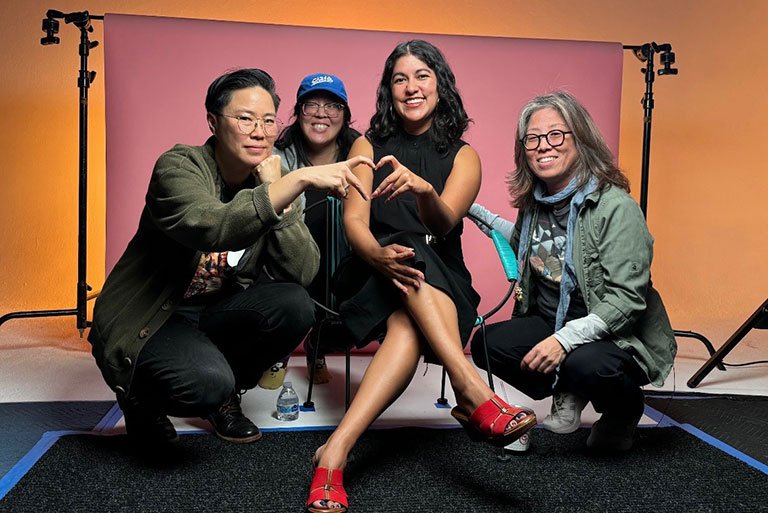
Andrea Acosta’s journey as an activist-academic started with K-pop. Specifically, it started on the frontlines of the BTS ARMY—the global fandom that launched a South Korean boy band to worldwide stardom.
BTS debuted in 2013 under Big Hit Entertainment. Acosta has been a fan of their music since 2014, and she carried that passion to grad school in 2017. By day, Acosta was a Victorian literature PhD scholar at UCLA. By night, she joined her fellow K-pop fans at concerts, filmings, and pop-ups. She even attended the 2017 Billboard Music Awards, which was when BTS became the first K-pop group to win a BBMA.
“My time in grad school coincided with the rise of BTS into the U.S. pop culture mainstream,” said Acosta. “I was growing into my own fan life around K-pop while also reading and studying for my qualifying exams.”
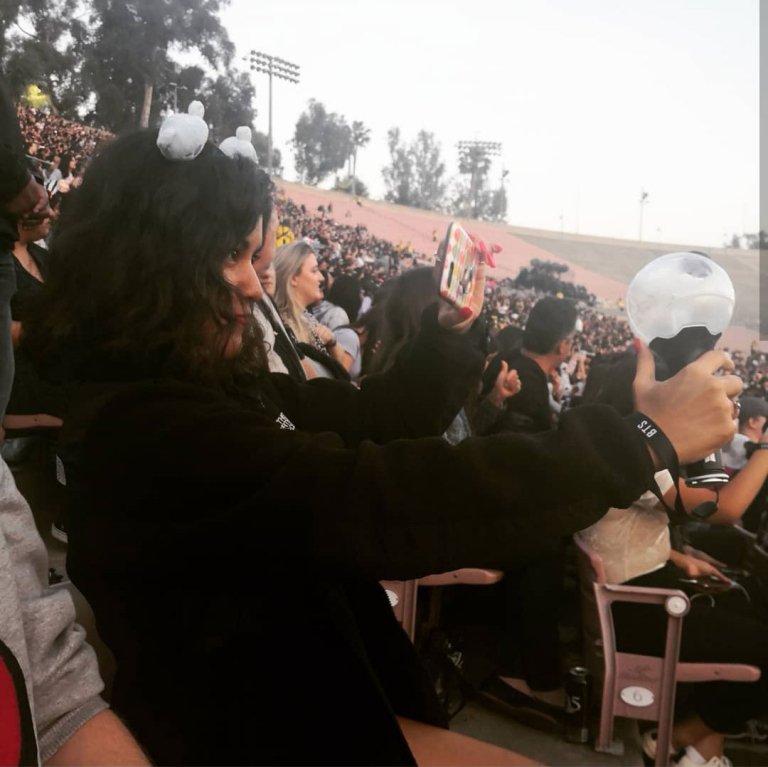
Acosta was disappointed by how academics discussed K-pop. Very little of the research at the time recognized the diverse grassroots nature of K-pop fan movements.
“A lot of the scholarship back then felt like a mismatch with what I was experiencing in these actual fan communities, which were made up of incredibly diverse women of color and queer people of color,” said Acosta. “These diverse communities were also extremely good at organizing online and connecting with each other to achieve common goals.”
Acosta changed directions to pursue digital media studies for her PhD.
“K-pop became a vector of thinking about broader issues related to race, activism, and digital media,” said Acosta.
K-Pop in the Classroom
Now Acosta is an assistant professor of media studies at Pitzer College, which has empowered her to incorporate K-pop into her courses.
“Pitzer allows for experimental pedagogy, which means my courses can be more than lectures: they can be activity- and discussion-based too,” said Acosta. “Learning is a lot more dynamic and fun.”
Acosta’s students draw from traditional film school techniques to analyze music videos and discuss recent pop culture. Her students also create mock-up social media posts in response to class readings.
“I have them pretend to use social media to educate others on a theory,” said Acosta. “It’s social media and pop culture paired with old-school critical theory.”
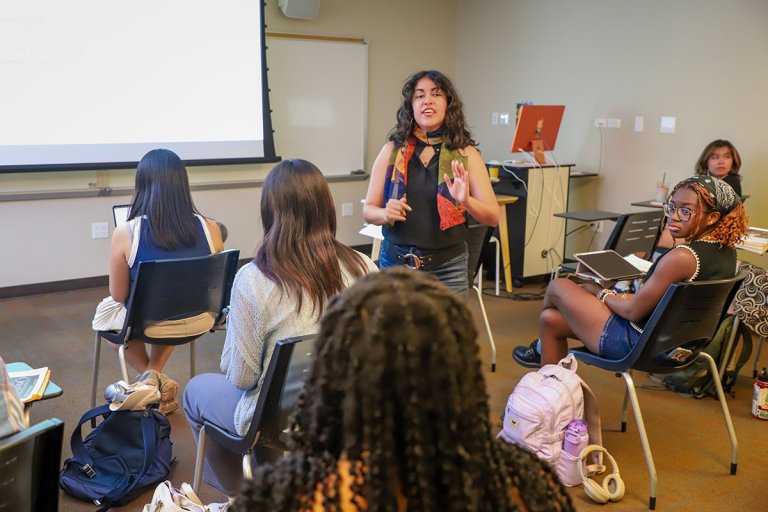
Acosta loves to mentor students in the classroom. She also works with students from various majors on their independent projects about K-media. What Acosta finds most unique about Pitzer students is how they deeply engage with coursework and relate it to their lives.
“I appreciate how they meet me earnestly and with real curiosity rather than just out of duty,” said Acosta.
K-Fandom & K-Critique
Acosta has found other ways to integrate K-pop into academia. She co-founded MENT Magazine, a publication that highlights critical and creative perspectives on K-media. Submissions can range from critical essays to fan art to multimedia projects.
“We’re trying to build this place for conversation and appreciation and also critique that bridges the academy, the fans, and the general public,” said Acosta. “We also pay attention to activism and activist possibilities of being a fan in Korean media.”
MENT Magazine is neither an inaccessible academic journal nor a fan blog. Acosta and her co-editor, Saint Mary’s College of California Associate Professor Yin Yuan, are big fans of K-media. However, they also wanted to challenge the genre’s shiny, corporate image.
“Fan spaces are sometimes super loving and not critical at all, and, on the other hand, academics tend to write in purely critical and often distant ways,” said Acosta. “We wanted to merge the two sides into something that looked more like ‘loving critique’.”
A few of Acosta’s students have published their work from her class in the magazine. Acosta enjoys helping students develop their pieces.
K-media is not just for the diehard fans. Acosta said it offers “transcultural awareness outside of the U.S. to the general public as well.”
Acosta believes K-media shows relatable economic challenges—from the labor of idols working for major corporations to a K-drama female lead trying to make ends meet.
“I see Korean media as routinely staging these global struggles that we all participate in and all want help getting out of sometimes,” said Acosta. “It offers us what I would call moments of unexpected solidarity.”
Header photo: Acosta poses behind the scenes of the documentary “BTS Army: Forever We Are Young.” Photo by Grace Lee. Pictured (L-R): Patty Ahn, Eurie Chung, Andrea Acosta, and Grace Lee.
News Information
Published
Author
Bridgette Ramirez
Organization
- Intercollegiate Department of Media Studies
News Type
Related News
All News