
Studying a Rare California Ecosystem
Hannah Chan ’24 and Bailey Parkhouse ’24 publish research they started as Pitzer students to study fire risks to the California sage scrub.
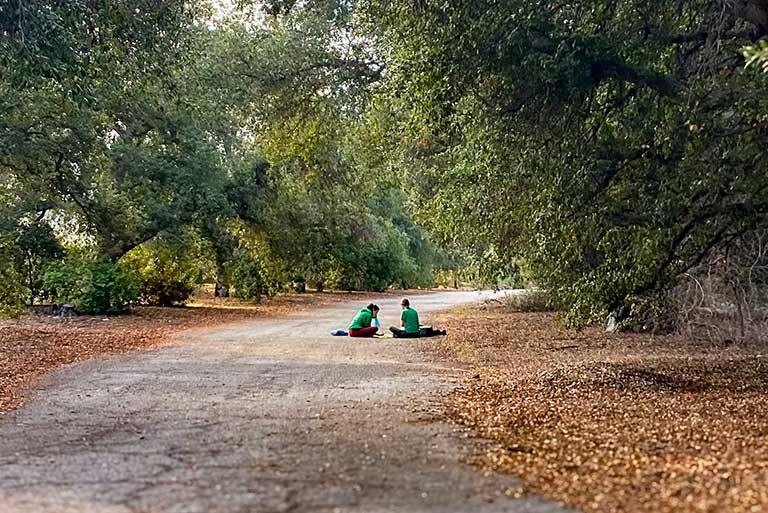
The rising frequency of Southern California fires threatens an increasingly rare ecosystem: the California sage scrub. Hannah Chan ’24 and Bailey Parkhouse ’24 seek to protect it through research that they originated at Pitzer.
Chan and Parkhouse recently published an article in the international scientific journal “Seeds” about how fire influences the sage scrub’s soil seed banks. The two-year project began when Chan and Parkhouse were Pitzer science undergraduates.
“What started as a capstone grew into an independent research project, and driven by our love for the subject, was carried all the way through to publication,” said Parkhouse.
Parkhouse and Chan sampled the sage scrub at the Bernard Field Station (BFS), an area of natural habitat that is within walking distance for Claremont Colleges students. Students from Claremont (and beyond) have used the outdoor laboratory to engage in hands-on research in regional biodiversity and ecosystems.
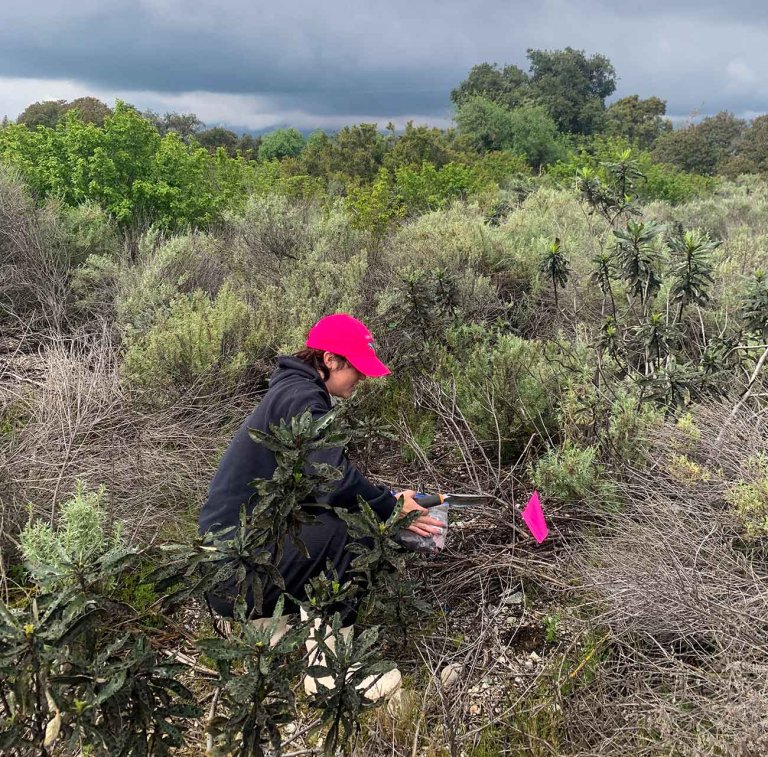
Chan and Parkhouse compared soil seed banks among different burned and unburned sage scrub sites. They were concerned about how non-native grasslands can take over sage scrub sites and make those areas even more prone to fires. Although their research concluded that not all sage scrub habitats are primed to transition to non-native grasslands after a fire, non-native seedlings still pose a risk.
“Fieldwork became one of the most meaningful parts of our academic journey, and the rare privilege of waking up and walking across the street to protected, living landscapes shaped both our learning and our sense of purpose,” said Chan and Parkhouse in a joint email statement.
Enriching faculty mentorship
Wallace Meyer, director of the BFS and a biology professor at Pomona College, was also a contributor of the paper and mentored Chan and Parkhouse during their research. Pitzer students have many opportunities for one-on-one guidance from science professors.
As students, Parkhouse and Chan also received mentorship from several faculty members in the Department of Natural Sciences of Pitzer and Scripps Colleges: Robert Brodman, Sarah Budischak, and Elise Ferree. These faculty supported Chan and Parkhouse from the lab to the classroom to the field.
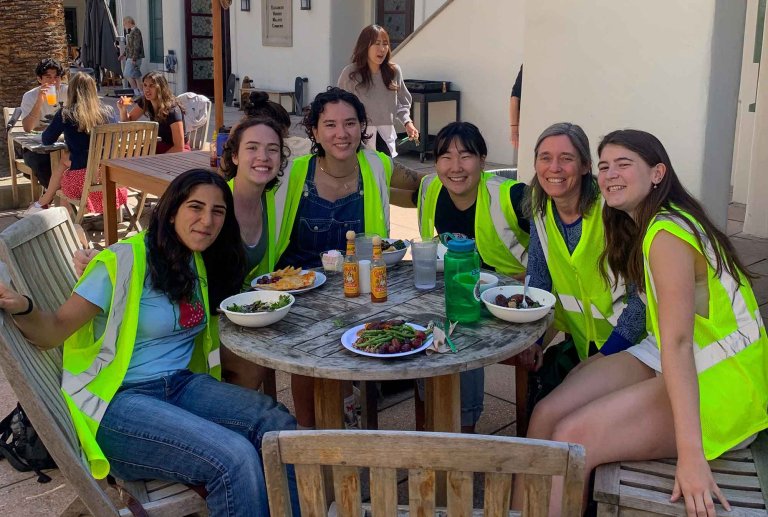
“We are so beyond grateful for the Pitzer science experience, without which we would not just be underprepared for careers in science, but we wouldn’t be nearly as passionate,” said Parkhouse and Chan.
Parkhouse studied biology at Pitzer and later earned a master’s degree in integrative plant sciences from Cornell University. She is currently a researcher and arborist at Cornell. In this role, she studies the early development of trees, root physiological ecology, and seed germination.
Meanwhile, Chan studied environmental science at Pitzer and now works as a wildlife rehabilitation technician at the Peninsula Humane Society & SPCA. Chan has engaged in nutrition, enrichment, veterinary treatment, and rehabilitation at the animal welfare organization.
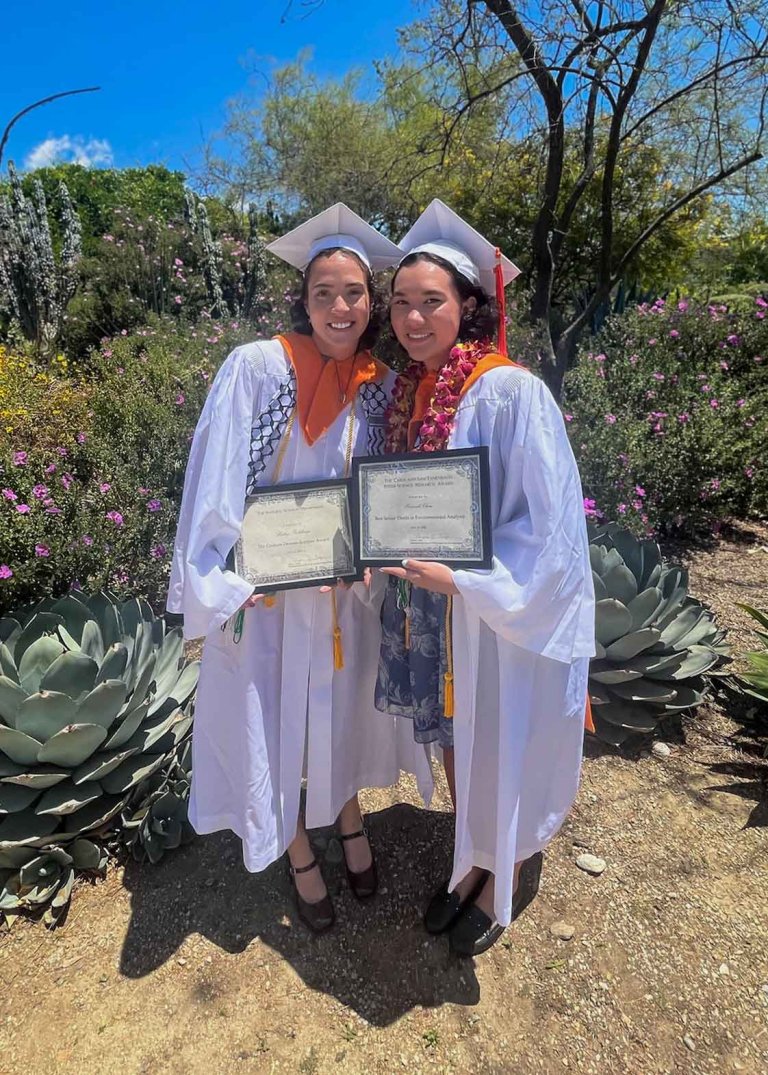
“Ultimately, Pitzer doesn’t just train students in science, it cultivates a love for science,” said Chan and Parkhouse. “It prepares people not only for success in careers and academia, but for lives of inquiry, care, and commitment to the fields they love. We wouldn’t be the scientists, friends, or people we are today without Pitzer College.”
News Information
Published
Author
Bridgette Ramirez
Organization
- Department of Natural Sciences
News Type
Related News
All News