
Professor Shares Insights on Changing Views of U.S. at the Olympics
NPR talked to David Goldblatt, an award-winning journalist whose Pitzer courses look at the intersection of sport with politics and economics
As the 2026 Milan Cortina Winter Olympics unfold, NPR’s Morning Edition turned to Pitzer’s David Goldblatt for insight into the global significance of the Games.
A sociologist, author, and broadcaster, Goldblatt is an adjunct professor at the College known for his award-winning journalism on the history and politics of sport. His books include The Ball Is Round: A Global History of Football and The Games: A Global History of the Olympics.
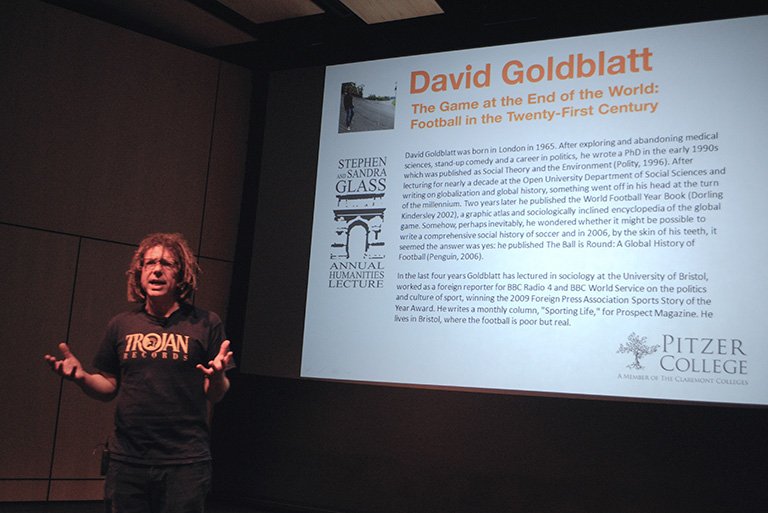
In a recent broadcast and accompanying article titled “U.S. steps onto Olympic stage at a time when its image and role in the world spark growing concern,” Goldblatt discussed the shifting international mood toward the United States. The interviewer noted the contrast with just two years ago, when athletes gathered in Paris for the 2024 Summer Olympics and the U.S. was still widely viewed as a defender of democracy and global trade, and a counterweight to authoritarian governments.
A member of Pitzer’s history field group, Goldblatt told NPR that political tensions have long surfaced during the Olympics. What makes this moment distinct, he observed, is that current U.S. policies and rhetoric (rather than those of another global power) are generating anxiety across Europe.
In that sense, Goldblatt suggested, the reception of the U.S. at these Games may offer a preview of how a shifting world order could reshape U.S.–Europe relations and America’s greater standing in the world.
“The Olympics might be a little glimpse of what it actually means to make such a kind of radical nativist, aggressive, more isolationist great power version of America,” Goldblatt said. “It may not prove terribly popular.”
At Pitzer, Goldblatt has taught courses that explore the intersection of sport, politics, and society, including Sociology of Sport, Urban Politics and Policy, The Political Economy of Global Football, and History of the Olympics. For him, examining sport through political and economic lenses offers students a powerful way to understand the forces shaping the modern world.
He hopes his students have gained "an understanding of the power and potential of the sporting spectacle to both sustain the dominant order and obscure its malignance," he said, "and just occasionally to challenge and defeat it."
News Information
Published
Author
Nick Owchar
News Type
Share This
Related News
All News