New Pitzer STEM & Humanities Faculty Start in Fall 2026
Pitzer College welcomes two tenure-track faculty in biology and political studies in fall 2026; the College also highlights the promotion of several current faculty.
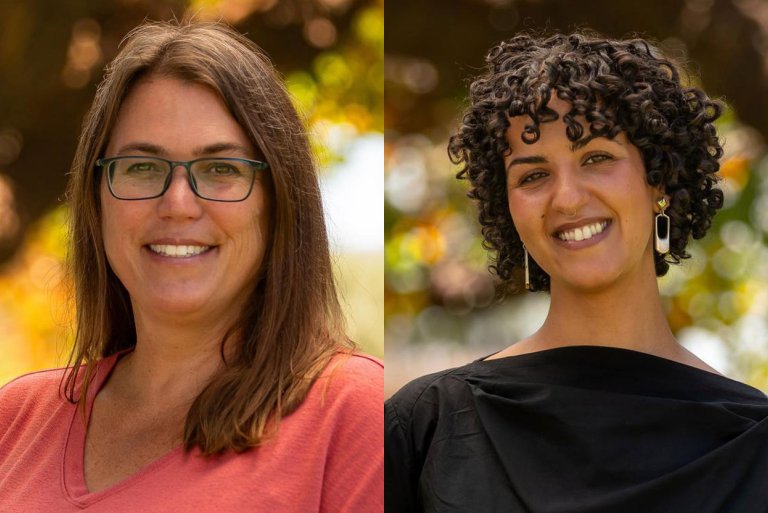
From molecular biology research to modern political theory, Pitzer’s newest tenure-track faculty embrace innovation. These professors are prepared to experiment with new ideas alongside students—bringing active, bold learning to the outside world.
The Department of Natural Sciences (DNS) of Pitzer and Scripps Colleges has welcomed Katie Kathrein, a biologist who researches stem cells to better understand blood cell formation and disease. Kathrein looks forward to collaborating with the engaged, purpose-driven students at Pitzer and the DNS.
“It is a pleasure to get to work with students who bring curiosity and a genuine interest in connecting science to the world around them,” said Kathrein. “I look forward to creating an inclusive, lively classroom and research environment where students can ask meaningful questions, build confidence as scientists, and have fun in the process.”
Pitzer’s Political Studies Field Group has also introduced Ayantu Israel-Megerssa, a political theorist who merges racial politics and philosophical skepticism. Drawing from multiple disciplines is a common practice at Pitzer, and Megerssa is eager to take part.
“Pitzer’s commitment to interdisciplinarity makes it the perfect place to think about the political problems we face,” said Megerssa. “I can’t wait to be in the classroom, thinking with students.”
Three current professors in mathematics and economics also received promotions this fall. Read on to learn more about Pitzer’s new faculty and faculty promotions.
Assistant Professor of Biology Katie Kathrein
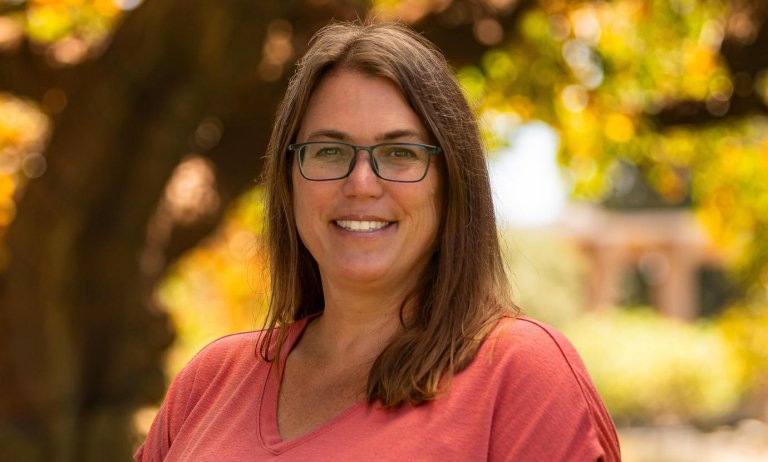
- Ph.D. in Cellular and Molecular Biology from Northwestern University Feinberg School of Medicine
- B.A. in Microbiology and Spanish from Miami University
Before arriving at the DNS, Katie Kathrein was an assistant professor at the University of South Carolina. Kathrein’s laboratory focuses on the mechanisms regulating gene expression that maintain stem cell function. Kathrein seeks to understand how these regulatory mechanisms are compromised in disease. This research combines discoveries in mice and human cell lines to study stem cell self-renewal and differentiation in blood cell formation, particularly as it relates to leukemia and other cancers.
Kathrein has received several grants from the National Institutes of Health (NIH)—including a $409,750 grant for 2025–27. This grant supports the project “Transformation of metal oxide nanomaterials in wildland-urban interface fires causes congenital heart disease,” for which Kathrein is a co-investigator. Kathrein is also the pilot project principal investigator for “The role of ING4 in the hematopoietic stem cell stress response.” The NIH awarded a $15,000 grant for 2025–26 to support this research.
Kathrein also previously worked as the instructor of pediatrics at Boston Children’s Hospital and Harvard Medical School. Kathrein has published work in PLOS ONE, Journal of Gene Medicine, iScience, and other scientific journals.
Assistant Professor of Political Studies Ayantu Israel-Megerssa
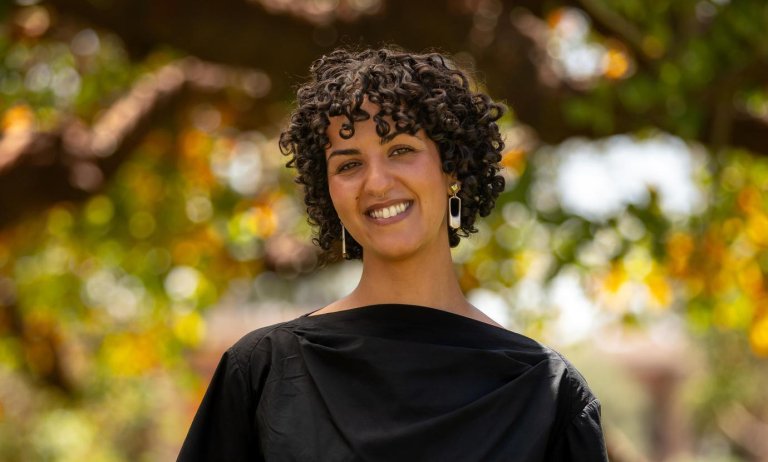
- Ph.D. and M.A. in Political Science from Brown University
- B.A. in International Studies from the University of Oregon
Before arriving at Pitzer, Megerssa was a Ph.D. candidate specializing in political theory at Brown University. Her research and teaching interests include early modern skepticism and political thought, democratic theory, black critical theory, feminist theory, political theory in literature and film, and the history of political thought.
Megerssa’s Ph.D. dissertation reconsiders René Descartes’ “Meditations on First Philosophy." Drawing on the political and art history of the period, Megerssa suggests that we can read Cartesian skepticism as a response to racial politics of 17th-century France and the Netherlands.The history opens up new routes for thinking about the politics of skepticism now. If skepticism presents as a problem that needs solving, Megerssa argues that skepticism may also be productive: it may create an alibi for those who want to be unresponsive to political problems. But if skepticism poses a threat to politics, it is also an inevitable feature of life in plurality. Megerssa asks: how might we recover a commitment to politics in the wake of skepticism? The wager of her work is that we must respond to skepticism with a different kind of skeptical politics.
During the fourth year of her Ph.D., Megerssa was awarded the Cogut Institute for the Humanities’ year-long research fellowship for Brown doctoral students in the humanities and humanistic social sciences.
Faculty Promotions
Pitzer has awarded promotions to three faculty members in mathematics and economics.
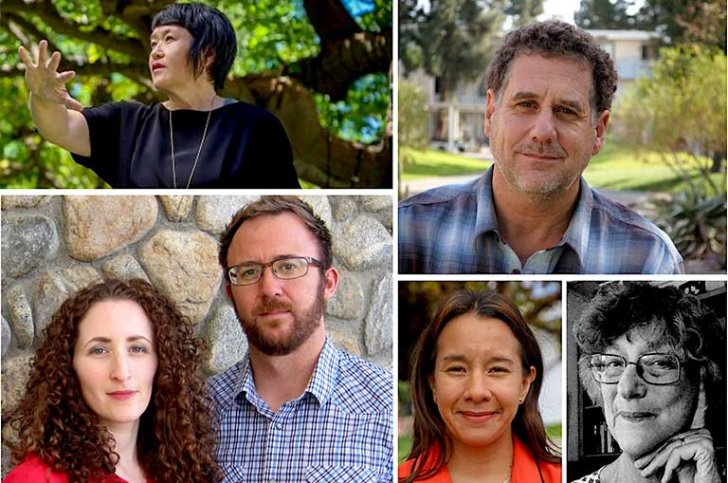
Bahar Acu has been promoted to associate professor of mathematics with tenure. Acu’s research interests are in geometric topology, specifically contact and symplectic topology in high dimensions and their relations with low-dimensional topology. Acu is also an extended faculty member at the Institute of Mathematical Sciences at Claremont Graduate University.
Deepti Goel has been promoted to associate professor of economics with tenure. Goel is an applied microeconomist whose fields of interest are causal inference, labor economics, and development economics. She is also a research fellow at the IZA-Institute of Labor Economics and at the Global Labor Organization.
Jemma Lorenat has been promoted to professor of mathematics with tenure. Her current work centers on visualization, communication, and socialization among geometers and statisticians during the late-nineteenth and early-twentieth centuries.
News Information
Published
Author
Bridgette Ramirez
Organization
- Department of Natural Sciences
News Type
Related News
All News