Brazil Study Abroad
Immersion, Dialogue, and Discovery: Inside Pitzer’s Brazil Program
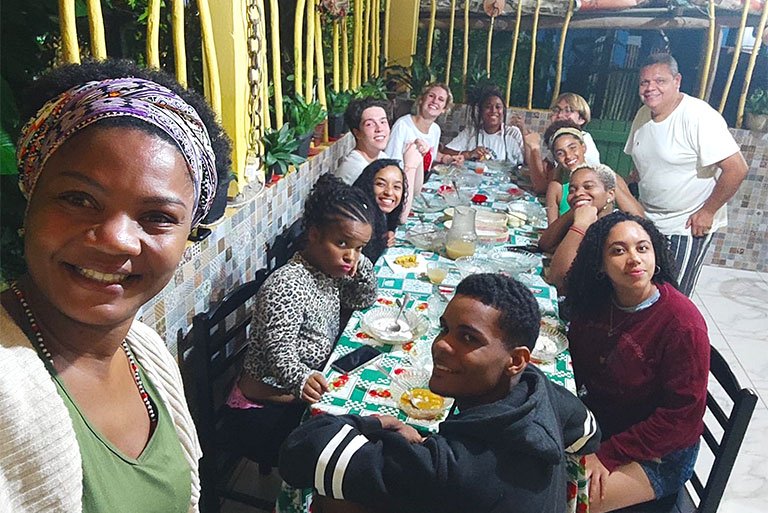
Brazil is a country of striking contrasts: vibrant cultural traditions along with deep social inequities, extraordinary diversity shaped by centuries of migration and ancestry. Pitzer’s program in Salvador, Bahia, invites students to encounter that complexity not from a distance, but up close.
For Luciana Reis, director of the program, meaningful connection with the local community is at the heart of the experience.
“We want students to explore Brazil’s richness in ways that are tangible and lived,” she explains. “The most important part is building real relationships.”
A typical week in Salvador blends classroom learning with lived experience. Students take Portuguese language classes and attend lectures on Brazilian and Bahian history, politics, and society. But learning extends well beyond the classroom walls. Cultural activities—capoeira and dance workshops, visits to historic neighborhoods, time at the beach, shared meals featuring local cuisine—allow students to see, taste, and feel the context behind what they study.
“It’s dynamic,” Reis says. “We mix academic learning with cultural practice so students can experience what they’re learning in real life.”
What distinguishes the program most, however, is its commitment to community engagement. Students often stay with Black families connected to the Steve Biko Institute, which partners with Pitzer on this program, deepening their understanding of Salvador’s cultural and social fabric. They visit local organizations focused on income distribution, human rights, and advocacy for historically marginalized communities. Community service placements further root students in the daily work of institutions striving for social change.
A cornerstone of the program is the partnership with “Parceiros de Aprendizagem”—learning partners who are current or former students of the Steve Biko Institute. These peers accompany certain program activities, engage in dialogue with Pitzer students, and share their lived experiences as young Black Brazilians navigating contemporary Salvador.
“These exchanges bring students closer to the realities of the city,” Reis says. “It’s about dialogue, not observation.”
Discoveries and Surprises
For many of the program’s participants, Brazil’s sheer size and diversity are among the first surprises that they experience. Students often arrive without fully grasping the complexity of the country’s racial and social dynamics—particularly in Salvador, the largest Black city outside the African continent. Confronting the visible legacies of racial segregation can be eye-opening.
To help students adjust, the program begins with guided conversations about Brazil’s history and its ongoing social and racial challenges. Assigned readings and facilitated discussions provide context, while staff offer consistent support as students navigate cultural differences—from climate and cuisine to interpersonal communication styles.
“Experiencing a culture that may be very different from your own can be challenging,” Reis acknowledges. “But it also broadens your worldview.”
That expansion often shapes students’ academic and professional trajectories. Over the years, Reis has seen many participants become deeply moved by the resilience of communities striving for dignity and equity. Witnessing the work of third-sector institutions—nonprofits and community organizations advocating for public policy change—opens new possibilities for how students imagine their futures.
For some, the experience clarifies an interest in public service or global studies. For others, it reframes how they think about inequality, race, or development in their own communities.
Language plays a central role in that transformation. Portuguese is not simply a subject of study; it is the medium through which daily life unfolds. Students are encouraged to use the language as much as possible—in classes, during community service, and at home with host families. Immersion accelerates both fluency and cultural understanding.
“Language and culture are fundamental to understanding a people,” Reis says. “They are essential to adapting to a new social reality.”
So who thrives in Salvador? According to Reis, there is no single profile. Each student brings their own background and perspective, and each leaves touched in different ways. But openness is key.
“Being willing to let go of stereotypes and embrace the new and unknown makes all the difference,” she says. “If you come ready to listen, to engage, and to learn, you will not only grow—you will have an experience you’ll carry with you for the rest of your life.”
In Brazil, learning happens in classrooms, on city streets, around family tables, and in conversations that challenge assumptions. It is immersive, demanding, and deeply human—and for many Pitzer students, transformative.
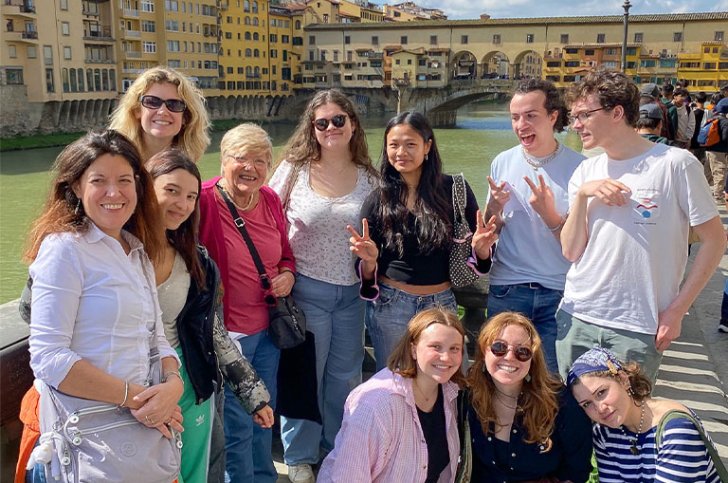
Photo caption: Brazil Program Director Luciana Reis (far left), pictured with Pitzer students and students from Steven Biko Institute.
News Information
Published
Author
Nick Owchar
Organization
- Study Abroad and International Programs
News Type
Related News
All News